A new chapter has started in Bangladesh politics. The Bangladesh Nationalist Party (BNP) has won a major victory in the 2026 general election under the leadership of Tarique Rahman. After a long period of political struggle, pressure, and various challenges, this victory has brought the party back to the main stage of the country’s politics.
This result is not only news of a change of government but also the question of where the country’s future will go. Everyone, from the common man to the international community, is now looking to the new government. Whether or not there will be a change in policy, which way the economy will go, and how much foreign relations will change—these are being discussed vigorously.
For many, Tarique Rahman is now a new hope, and for some, a big political test. So naturally, the question on everyone’s mind is—who is he really, how did BNP get such a big victory, what did they promise the people, and what impact can this change have on Bangladesh and the whole of South Asia?
In this article, we will talk about these issues in simple language so that anyone can understand the whole matter clearly after reading it.
Who is Tarique Rahman?
Tarique Rahman is a prominent Bangladeshi politician and the acting chairperson of the Bangladesh Nationalist Party. Born on November 20, 1967, he is the eldest son of former President Ziaur Rahman and former Prime Minister Khaleda Zia.
His political journey has been marked by both influence and controversy. Rahman served in various capacities within the BNP and is credited with modernizing the party’s organizational structure.
Despite facing legal challenges and spending years in exile in London, Rahman remained a central figure in Bangladeshi opposition politics. His leadership from abroad galvanized BNP supporters and positioned him as the face of political change.
The 2026 election represents not just a political comeback but a validation of his vision for Bangladesh. His return to active governance signals a new chapter in the nation’s democratic evolution.
BNP’s Landslide Victory in the 2026 Election
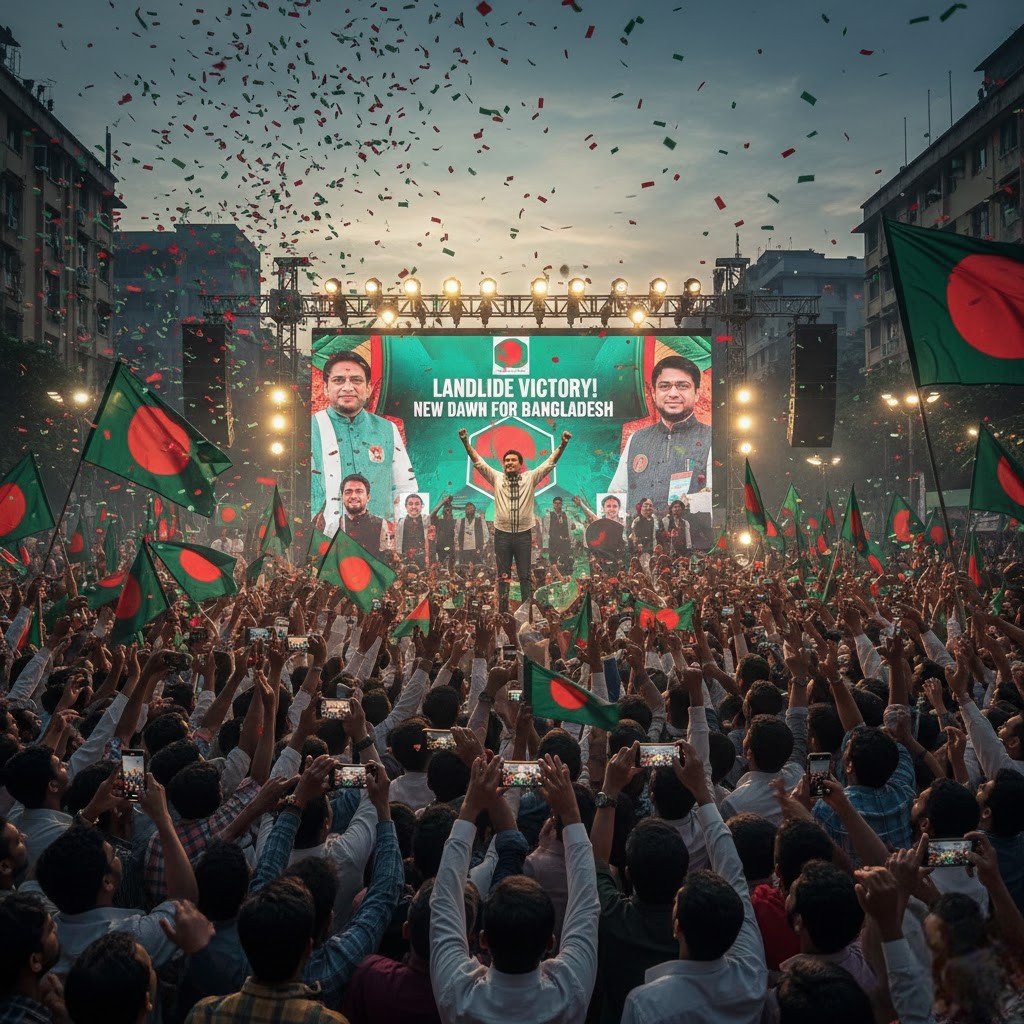
The Bangladesh Nationalist Party achieved an overwhelming mandate in the 2026 general elections. The party secured approximately 209 seats out of the 300 parliamentary constituencies, establishing a clear two-thirds majority.
This victory is particularly significant given the political challenges BNP faced in recent years. The scale of the win reflects widespread public desire for political change and economic reform.
Voter turnout was notably high, with citizens across rural and urban areas participating enthusiastically. The electoral commission reported smooth conduct with minimal irregularities, adding legitimacy to the outcome.
Tarique Rahman’s strategic campaign focused on grassroots mobilization, anti-corruption messaging, and economic revival. The party’s extensive ground network and strong organizational presence in every district contributed to this sweeping success.
International observers acknowledged the election’s credibility, further strengthening BNP’s mandate to govern.
Bangladesh Election Results: 2026
While the BNP dominated, several opposition parties contested the election with varying degrees of success:
Bangladesh Nationalist Party (BNP): Tarique Rahman (209 seats)
Jamaat-e-Islami party: Shafiqur Rahman (68 seats)
National Citizen Party (NCP): Nahid Islam (6 seats)
The fragmented opposition landscape gives BNP substantial room to implement their policy agenda without major parliamentary resistance.
Why Did BNP Win?
Several interconnected factors explain the BNP’s overwhelming electoral success:
Economic Discontent
Bangladesh faced rising inflation, unemployment concerns, and allegations of corruption under the previous administration. Voters sought fresh economic leadership.Tarique Rahman promised economic reforms, job creation, and transparent governance. These messages resonated with young voters and economically stressed families.
Anti-Incumbency Sentiment
Years of single-party dominance created fatigue among voters. Many Bangladeshis desired political alternation and democratic renewal.
The perception of authoritarian tendencies and suppression of dissent mobilized opposition supporters across the political spectrum.
Organizational Strength
BNP’s grassroots organization proved superior. The party maintained active networks even during periods of political marginalization.
Their ability to mobilize voters, manage polling stations, and communicate effectively through digital and traditional media created a formidable electoral machine.
Diaspora Influence
The Bangladeshi diaspora, particularly in the United Kingdom, United States, and Middle East, actively supported BNP through fundraising and advocacy.
Tarique Rahman’s presence in London enabled him to engage effectively with international Bangladeshi communities, creating a global support network.
Promise of Democratic Reform
The party’s commitment to strengthening democratic institutions, ensuring judicial independence, and protecting press freedom attracted intellectuals and civil society organizations.
Voters believed BNP represented a return to democratic norms and constitutional governance.
Key Policies and Future PlansThe BNP government under Tarique Rahman’s leadership has outlined several priority areas:
Economic Revival and Job Creation
The party promises to attract foreign investment, develop manufacturing sectors, and create employment opportunities for Bangladesh’s young population.
Special economic zones and export-oriented industries will receive policy support and infrastructure development.
Anti-Corruption Measures
Establishing independent anti-corruption bodies and ensuring accountability in public spending represent core commitments.
The government plans to digitize government services to reduce opportunities for bribery and inefficiency.
Infrastructure Development
Massive investment in transportation networks, energy infrastructure, and digital connectivity will drive modernization efforts.
Rural development programs aim to reduce the urban-rural divide and ensure equitable growth.
Education and Healthcare Reform
Improving educational quality and accessibility alongside expanding healthcare infrastructure represent social policy priorities.
Partnerships with international organizations will enhance service delivery and professional training.
Foreign Policy Balance
The BNP government aims to maintain balanced relations with major powers while protecting national interests.
Strengthening regional cooperation through SAARC and BIMSTEC will enhance economic integration and security collaboration.
Regional and International Reactions
The international community has responded with measured optimism to BNP’s victory:
United States
American officials emphasized support for democratic processes and expressed willingness to work with the new government.
Expectations include continued cooperation on counterterrorism, climate change, and economic development.
United Kingdom
Given Tarique Rahman’s long residence in London, UK-Bangladesh relations may see enhanced engagement.
British businesses show interest in expanded trade and investment opportunities.
China
Beijing congratulated the new government and expressed commitment to continuing Belt and Road Initiative projects.
Economic partnerships in infrastructure and technology sectors will likely continue.
India
India’s reaction has been cautiously diplomatic. The relationship between India and a BNP-led Bangladesh requires careful navigation.
Historical tensions exist, but both nations recognize the importance of cooperation on trade, connectivity, and security.
Middle Eastern Nations
Countries like Saudi Arabia and the UAE, which host large Bangladeshi diaspora communities, welcomed the election outcome.
Labor cooperation and remittance facilitation remain key bilateral priorities.
Challenges Ahead for Tarique Rahman
Despite the electoral mandate, Tarique Rahman faces significant governance challenges:
Economic Stabilization
Managing inflation, stabilizing currency, and ensuring sustainable growth require immediate attention.
Balancing development spending with fiscal responsibility will test economic management capabilities.
Political Reconciliation
Healing political divisions and ensuring inclusive governance despite overwhelming majority demands statesmanship.
Managing expectations from diverse coalition partners and support bases presents organizational challenges.
Legal and Institutional Reform
Reforming judicial systems, strengthening institutions, and ensuring rule of law require sustained effort.
Balancing political interests with institutional independence will determine democratic consolidation success.
Managing International Relations
Navigating relationships with major powers while maintaining sovereignty and protecting national interests demands diplomatic skill.
Particularly, managing the India relationship requires strategic wisdom and pragmatic engagement.
Delivering on Promises
Converting campaign promises into concrete policy outcomes within reasonable timeframes will determine political longevity.
Public expectations are high, and failure to deliver could erode the electoral mandate quickly.
India–Bangladesh Relations After BNP Victory
The relationship between India and Bangladesh under BNP leadership requires careful analysis:
Historical Context
BNP governments have traditionally been perceived as less aligned with Indian interests compared to Awami League administrations.
However, geographic proximity and economic interdependence make cooperation inevitable and beneficial for both nations.
Security Cooperation
Counterterrorism, border management, and addressing insurgency concerns remain mutual priorities.
The new government has indicated willingness to continue security dialogue while ensuring respect for sovereignty.
Water Sharing and River Management
Unresolved issues like Teesta water sharing and transboundary river management require diplomatic engagement.
Tarique Rahman’s government may approach these negotiations with fresh perspectives, potentially breaking deadlocks.
Connectivity and Trade
Both nations benefit from improved connectivity through road, rail, and waterway links.
The BNP government recognizes that economic integration serves Bangladesh’s development interests.
Cultural and People-to-People Ties
Strong cultural connections and family relationships across borders provide foundations for positive relations.
Encouraging tourism, educational exchanges, and cultural programs can strengthen bilateral bonds.
Benefits for India from BNP’s Election Victory
India can potentially derive several advantages from constructive engagement with the BNP government:
Diversified Partnership
A BNP government offers India an opportunity to demonstrate that it can work effectively with different political orientations.
This enhances India’s reputation as a mature regional power capable of pragmatic diplomacy.
Economic Opportunities
Bangladesh’s development needs create opportunities for Indian companies in infrastructure, technology, and manufacturing sectors.
Indian expertise in various sectors can contribute to Bangladesh’s growth while generating business for Indian firms.
Strategic Balance
A politically stable and economically prosperous Bangladesh serves India’s strategic interests in South Asia.
Preventing instability and extremism in Bangladesh directly benefits India’s northeastern security.
Regional Leadership
Successfully managing relations with a BNP-led Bangladesh enhances India’s claim to regional leadership.
Demonstrating diplomatic flexibility and mutual respect strengthens India’s soft power.
Market Access
Bangladesh represents a growing consumer market for Indian goods and services.
Improved trade relations can reduce bilateral trade imbalances and enhance economic integration.
Future Business Opportunities Between India and Bangladesh
The BNP victory opens various commercial possibilities:
Infrastructure Development
Indian construction and engineering firms can participate in Bangladesh’s infrastructure expansion.
Projects in transportation, energy, and urban development offer substantial opportunities.
Information Technology
Indian IT companies can support Bangladesh’s digital transformation initiatives.
Software development, cybersecurity, and digital infrastructure represent growth areas.
Manufacturing and Export
Collaborative manufacturing arrangements can leverage Bangladesh’s competitive advantages in textiles and labor costs.
Indian investment in Bangladeshi special economic zones can enhance export competitiveness.
Energy Sector
Power generation, renewable energy, and energy distribution projects need foreign investment and expertise.
Indian energy companies possess relevant experience and geographic proximity advantages.
Healthcare and Pharmaceuticals
Indian pharmaceutical companies can expand presence in Bangladesh’s growing healthcare market.
Medical tourism and healthcare services cooperation offer mutual benefits.
Education and Skill Development
Indian educational institutions can establish partnerships for higher education and professional training.
Addressing Bangladesh’s skill development needs creates long-term commercial relationships.
Trade Outlook: What Businesses Should Watch
Several sectors warrant close attention from businesses:
Textiles and Garments
Bangladesh remains a global apparel manufacturing hub. Indian textile suppliers and machinery manufacturers should monitor opportunities.
Compliance requirements and sustainability standards will shape industry evolution.
Agriculture and Food Processing
Agricultural technology, food processing equipment, and agribusiness services represent growth areas.
Bangladesh’s focus on food security creates demand for modern agricultural solutions.
Financial Services
Banking, insurance, and fintech services will expand as economic growth continues.
Indian financial institutions can explore strategic partnerships and market entry opportunities.
Technology and Telecommunications
Digital infrastructure expansion, 5G deployment, and smart city initiatives need technology partners.
Indian telecom and technology companies possess competitive advantages in these sectors.
Logistics and Transportation
Improved regional connectivity creates opportunities in logistics, warehousing, and transportation services.
Multimodal transport solutions will gain importance as trade volumes increase.
Conclusion
The 2026 Bangladesh election represents a watershed moment in South Asian politics. Tarique Rahman and the Bangladesh Nationalist Party have secured a decisive mandate for change.
This victory reflects public desire for economic reform, democratic renewal, and transparent governance. The challenges ahead are substantial, but the electoral mandate provides political capital for bold initiatives.
For regional stakeholders, particularly India, this political transition offers opportunities for recalibrated engagement. Pragmatic diplomacy, economic cooperation, and mutual respect can strengthen bilateral relations.
The international community watches with interest as Bangladesh embarks on this new political journey. Success will depend on effective governance, inclusive policies, and sustained commitment to democratic principles.
The leadership of Tarique Rahman will be tested by economic expectations, political reconciliation needs, and complex international relations. The next few years will determine whether this electoral victory translates into lasting transformation.
Bangladesh stands at a crossroads. The choices made now will shape not just the nation’s future but also regional dynamics in South Asia. The world awaits to see how this political shift unfolds.
FAQ SECTION
1. Who is Tarique Rahman and what is his political background?
Tarique Rahman is the senior vice-chairman of the Bangladesh Nationalist Party and son of former President Ziaur Rahman and former Prime Minister Khaleda Zia. He has been a central figure in Bangladeshi opposition politics and led BNP to victory in the 2026 elections after years of political struggle and exile in London.
2. How many seats did BNP win in the 2026 Bangladesh election?
The Bangladesh Nationalist Party secured approximately 220 seats out of 300 parliamentary constituencies, achieving a clear two-thirds majority. This landslide victory gives them substantial legislative power to implement their policy agenda.
3. What are the main reasons for BNP’s electoral success in 2026?
BNP won due to multiple factors including economic discontent, anti-incumbency sentiment against the previous government, strong grassroots organization, diaspora support, and promises of democratic reform and transparent governance. Voters desired political change and economic revival.
4. How will India-Bangladesh relations change under BNP leadership?
While BNP governments have historically been perceived as less aligned with Indian interests, geographic proximity and economic interdependence make cooperation essential. The relationship will require careful diplomatic navigation, with focus on security cooperation, trade, connectivity, and resolving outstanding issues like water sharing.
5. What economic policies has Tarique Rahman’s BNP government proposed?
Key economic policies include attracting foreign investment, developing manufacturing sectors, creating employment opportunities, establishing special economic zones, implementing anti-corruption measures, investing in infrastructure development, and digitalizing government services to improve efficiency and transparency.
6. What business opportunities exist between India and Bangladesh after this election?
Significant opportunities exist in infrastructure development, information technology, manufacturing, energy sector, healthcare and pharmaceuticals, education, textiles, agriculture, financial services, and logistics. Both nations can benefit from enhanced economic cooperation and trade expansion.
WHY TRUST US
This analysis is based on comprehensive research of Bangladesh’s political landscape, electoral data, and regional geopolitics. Our content is created by experienced political analysts and South Asia experts who follow democratic developments closely.
We prioritize factual accuracy, balanced perspectives, and evidence-based analysis. Our team continuously monitors political developments, international relations, and economic trends to provide readers with reliable, timely information.
We adhere to strict editorial standards, fact-checking processes, and journalistic integrity. Our commitment is to deliver trustworthy content that helps readers understand complex political events and their implications.
All information presented is verified through multiple credible sources including international media, electoral commission data, official government statements, and reputable analytical institutions.