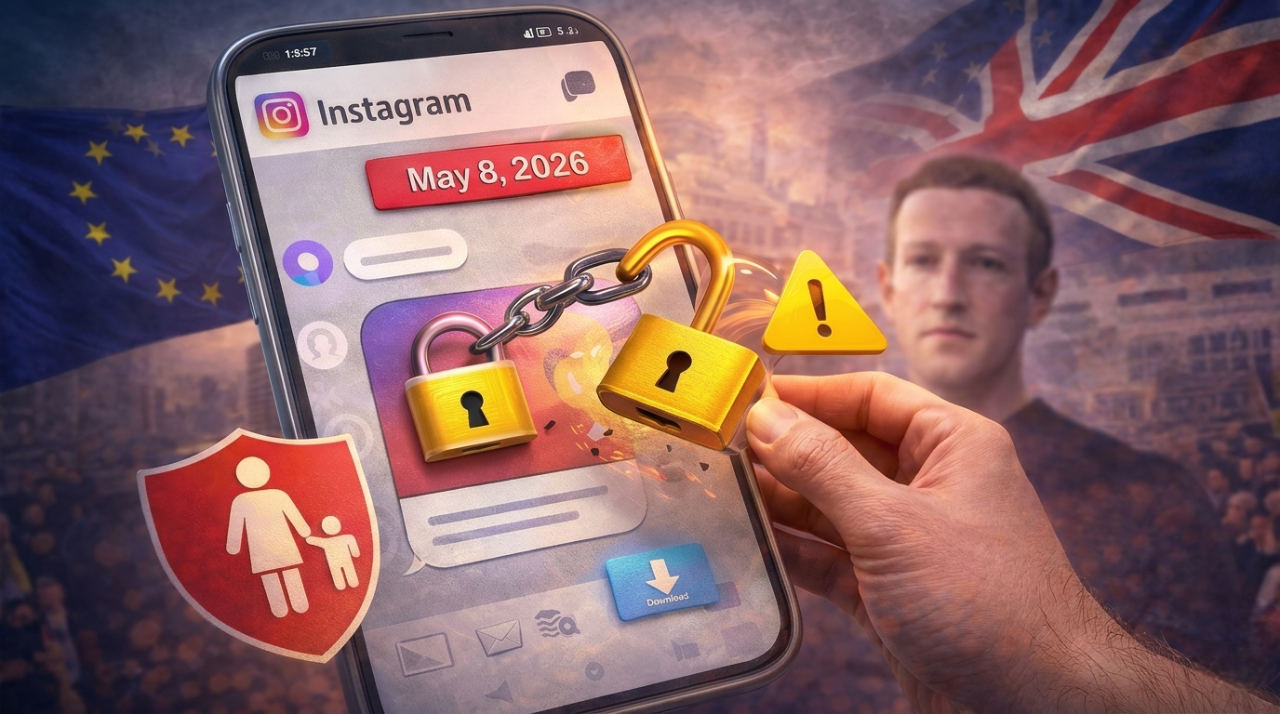
If you use Instagram to send private messages, you need to read this.
- What Are Instagram Encrypted Messages?
- Why Instagram Introduced End-to-End Encryption
- Why Meta Is Removing Encrypted Messages in 2026
- The EU Digital Markets Act and Legal Pressure
- Child Safety and Regulatory Compliance
- Meta’s Business Interests
- What Will Change After May 8, 2026
- Privacy Concerns and User Reactions
- Should You Really Use Instagram After May 8, 2026?
- Alternatives for Secure Messaging
- What Instagram Users Should Do Now
- Conclusion
- FAQ Section
- 1. What exactly are Instagram encrypted messages?
- 2. Why is Meta removing this feature in 2026?
- 3. Will my old DMs stay private after the May deadline?
- 4. Is WhatsApp also losing its encryption?
- 5. What is the best alternative for truly secure chatting?
- 6. Can I still use the app once encryption is gone?
- Why Trust This Information
Meta is making a big change to Instagram encrypted messages in 2026. The company is planning to remove the end-to-end encryption feature from Instagram DMs. This is a significant shift from the direction Meta was heading just a few years ago.
Whether you care deeply about privacy or you are just a casual Instagram user, this change will directly affect how secure your private conversations are on the platform.
In this article, we will break down everything clearly, including what Instagram end-to-end encryption actually means, why Meta introduced it, why they are now removing it, and most importantly, what you should do to protect your messages.
What Are Instagram Encrypted Messages?
Let’s break down the hype around Instagram encrypted messages before we dive into the latest updates. Essentially, when you hit send on a standard DM, that text journeys from your device to Meta’s data centers before landing on your friend’s screen. In that traditional setup, the company technically has the keys to view your data while it sits on their hardware.
However, Instagram encrypted messages change the game by using end-to-end encryption. This tech locks your chat the instant it leaves your hand and only unlocks it once it reaches the intended recipient. It creates a private digital tunnel where the content remains scrambled to everyone else. This means Meta can’t peek at your notes, hackers are left in the dark, and even official agencies are blocked out unless they actually hold your physical phone.
It is helpful to visualize Instagram encrypted messages as a physical letter placed inside a high-tech, reinforced safe. You spin the dial to lock it, and only the person on the other end has the specific combination required to open the door. Meta originally rolled this out as an optional setting within your DMs, marking a major shift toward user privacy across all their social apps. By making Instagram encrypted messages a core part of the experience, they have ensured that your personal jokes, secrets, and daily rants stay strictly between you and your inner circle, away from any prying eyes.
Why Instagram Introduced End-to-End Encryption
Years ago, Meta laid out a massive vision for user privacy. The plan was to link Facebook Messenger, WhatsApp, and Instagram under a single, ironclad security umbrella. Since WhatsApp already used full end-to-end encryption, the goal was simply to bring that same high-level protection to everyone else.
Back in 2019 and 2020, Meta—still known as Facebook at the time—announced these big plans to weave all three apps into one encrypted framework. They pitched it as a privacy-first move, and the public was on board.
Privacy experts were happy, and after a long period of testing, Instagram encrypted messages finally started rolling out to more users. By late 2023, encryption became the standard for all personal chats on Messenger, and everyone assumed Instagram would be next.
So, what changed? In a surprising turn of events, Meta recently announced that they are pulling the plug. Instead of making it the default, they are actually removing the option for Instagram encrypted messages entirely by May 8, 2026.
The company claims they are making this move because almost no one was actually using the feature in their DMs. While they still promote security on WhatsApp, they are now steering people away from Instagram encrypted messages if they want that level of privacy. This marks a massive reversal from their original “privacy-first” promises, leaving many to wonder if the era of truly private DMs on the platform is officially over.
Why Meta Is Removing Encrypted Messages in 2026
This is the part that has surprised many users and privacy experts alike.
According to reports, Meta is planning to remove Instagram end-to-end encryption starting around May 8, 2026. The reason, however, is not entirely Meta’s own decision.
The EU Digital Markets Act and Legal Pressure
One of the biggest reasons behind this move is legal and regulatory pressure, particularly from the European Union. The EU’s Digital Markets Act (DMA) requires large tech platforms to allow interoperability. In simple words, this means Instagram users should be able to communicate with people on other platforms.
The challenge is this: if Instagram needs to send and receive messages from third-party apps, end-to-end encryption becomes technically complicated to maintain across all platforms consistently. Ensuring encrypted connections between different apps with different systems is extremely difficult.
Meta has argued that full interoperability with external apps conflicts with maintaining the strict privacy guarantees that end-to-end encryption offers.
Child Safety and Regulatory Compliance
Another important factor is child safety. Governments around the world, including the UK and several EU nations, have pushed hard for tech companies to be able to detect illegal content such as child sexual abuse material (CSAM) in private messages.
End-to-end encryption, by its very nature, makes it impossible for even Meta to scan message contents. While this is great for user privacy, it has created legal friction with governments that want platforms to monitor and report harmful content.
This tension between privacy and safety has been ongoing for years, and it appears Meta is leaning toward compliance with government requirements.
Meta’s Business Interests
Let us be honest here. Meta is also an advertising company. The more data they can access about user behavior and communication, the better they can target ads and improve their products. Encrypted messages are essentially a blind spot for Meta’s data operations.
While Meta has not officially stated this as a reason, it is widely discussed among tech analysts and privacy researchers.

What Will Change After May 8, 2026
So, what does the Instagram experience actually look like in 2026 once these updates take effect? Here is a straightforward breakdown of the major shifts you can expect:
- Your DMs lose that “extra” layer of privacy: Once the end-to-end encryption is pulled, Meta technically gains the ability to see what is happening in your direct messages again. While this doesn’t mean employees are personally reading your notes, it does mean your chats are no longer locked away on a server that only you can access.
- Automated message scanning returns: Without the shield of encryption, Meta can use its automated systems to scan your conversations. This is mainly to flag things like spam, misinformation, or content that breaks their community rules, similar to how most email providers or other social apps already handle data.
- Legal requests become much simpler for Meta: In the past, encryption meant that even if the government or law enforcement had a warrant, Meta literally couldn’t hand over your messages because they didn’t have the “key.” Without Instagram encrypted messages, the company can now comply with these legal requests and provide chat logs if required by law.
- Better cross-platform chatting: On a more convenient note, removing these encryption barriers might finally make it easier to talk to people on different apps. This could pave the way for a more unified system where you can chat with users on other platforms directly from your Instagram inbox, meeting new international digital standards.
- The app itself won’t feel any different: For the average person, the DM interface will look and act exactly the same as it does today. The changes are happening entirely “under the hood.” You’ll still send photos and texts just like always, even though the backend security for Instagram encrypted messages has shifted significantly.
Privacy Concerns and User Reactions
The recent announcement that the plug is being pulled on certain privacy features has triggered a wave of concern among everyday users, tech experts, and digital rights groups alike.
Deep Concern From Privacy Advocates
Organizations dedicated to digital freedom have been quick to criticize this shift. They argue that moving away from Instagram encrypted messages sets a risky precedent for the entire tech industry. When people feel like their private chats aren’t actually private, it creates a “chilling effect” where they no longer feel safe speaking freely. Many rely on DMs to share sensitive details—ranging from personal health struggles to private business ideas—under the assumption that the door is locked. Now, that sense of security is being openly challenged.
Confusion Among Regular Users
For the average person, the technical side of Instagram encrypted messages might be a bit confusing, but the core issue of privacy is easy to grasp. As word spreads that Meta could technically access chat logs or hand them over to officials, a general sense of distrust is growing. We are already seeing a massive spike in people searching for how to keep their data safe or looking for alternative apps that still offer a higher level of protection for their daily conversations.
Criticism From the Tech Community
Within the cybersecurity world, the reaction has been largely negative. Experts emphasize that encryption is the single most effective tool we have for protecting our digital lives in the modern age. They see any step away from Instagram encrypted messages as a major regression, regardless of the company’s official reasoning. From their perspective, once you weaken these security standards, you are essentially moving backward in the fight for user privacy and data integrity across the web.
Should You Really Use Instagram After May 8, 2026?
So, is it still worth using Instagram once this change goes live? The real answer is that it completely depends on how you use your DMs.
If you mainly use the app to browse Reels, share Stories, post your own content, or just chat casually with your friends, then you really don’t have much to worry about. The app itself isn’t becoming “dangerous” or broken; it’s just the specific privacy level of your private messages that is taking a hit. You can keep using it exactly as you do now for all the fun, social stuff.
However, if you are someone who frequently shares highly sensitive info—like private health updates, confidential business plans, financial details, or anything you wouldn’t want a third party to ever see—you’ll need to rethink your habits after May 8, 2026.
The Simple Gut-Check
Before you hit send on a DM after the May deadline, just ask yourself one quick question:
“Would I be okay if Meta could technically read what I’m about to say?”
If your answer is a quick “yes,” then go ahead and send it. But if that thought makes you uncomfortable, it’s a clear sign that you should move that specific conversation over to an app like Signal or WhatsApp instead.
Who Needs to Be Extra Careful?
There are certain groups that should stay especially alert. If you are a journalist, an activist, a healthcare professional, or a business owner handling trade secrets, the risks are much higher. Once Instagram encrypted messages are a thing of the past, your sensitive discussions will no longer have that digital “lock and key” protecting them from prying eyes.
The Bottom Line
Instagram is still a fantastic place for creativity, entertainment, and staying connected with the world. That part of the experience isn’t going anywhere. You just have to stop looking at your DMs as a private, unbreakable vault. They were never a perfect solution for top-secret talks, and after May 8, 2026, that becomes even more obvious. Use the platform for what it’s best at, but keep your truly private business elsewhere.
Alternatives for Secure Messaging
If Instagram encrypted messages are going away, you might be wondering where you can chat securely. The good news is there are strong alternatives.
Signal
Signal is widely considered the gold standard of secure messaging. It uses end-to-end encryption by default for all messages and calls. The code is open source, meaning anyone can inspect it for security issues. Signal does not collect metadata about your conversations and is completely free to use.
WhatsApp, ironically also owned by Meta, still maintains end-to-end encryption for all personal chats by default. While some users have concerns about WhatsApp’s data-sharing practices with Meta, the actual message content remains encrypted.
Telegram (Secret Chats)
Telegram offers a Secret Chat feature that uses end-to-end encryption. However, regular Telegram chats are not end-to-end encrypted by default. If you use Telegram, make sure to enable Secret Chats for sensitive conversations.
iMessage (Apple)
For iPhone users communicating with other iPhone users, Apple’s iMessage is end-to-end encrypted by default. Apple has consistently defended encryption and user privacy as core values.
If privacy is a priority for your conversations, migrating important chats to one of these platforms before the Instagram changes take effect is a wise move.
What Instagram Users Should Do Now
Feeling a bit uncertain is totally normal with these shifts. Here are a few practical moves you can make to protect your digital life as the privacy landscape on the app changes.
- Move private talks off the platform: If you regularly handle personal, work-related, or financial details in your DMs, start shifting those conversations to Instagram encrypted messages alternatives like Signal or WhatsApp immediately.
- Audit your privacy settings: Take a moment to dig into your current settings. Lock down your profile and limit shared data as much as possible to maintain a smaller digital footprint.
- Treat DMs like email: From now on, act as if your direct messages are as public as an email. Only send things you would be comfortable with if the company technically had access.
- Stay in the loop: Keep a close eye on tech news as the May 8 deadline approaches. The situation could still shift as much as possible before the final rollout.
Conclusion
The news about Instagram encrypted messages being removed in 2026 marks one of the most significant shifts in social media privacy lately. Meta’s decision comes from a complex mix of regulatory pressure, legal demands, and changing business strategies. While the company has kept its official announcements relatively quiet, recent reports confirm that major security changes are coming to your DMs by May 8, 2026.
For everyday users, the impact is quite personal. Without the shield of Instagram encrypted messages, your private conversations will no longer be locked away from Meta’s servers. This means your texts, photos, and voice notes could technically be accessed by automated moderation systems or handed over to law enforcement if they have a legal order. The best way to handle this is to stay informed and prepared.
Start moving your most sensitive discussions to secure alternatives, double-check your privacy settings, and treat your DMs with a bit more caution as the deadline approaches. Instagram will still be a great place for casual socializing and sharing content, but it’s time to stop thinking of the inbox as a private vault. Taking your digital security seriously now ensures you aren’t caught off guard when the lights go out on Instagram encrypted messages.
FAQ Section
1. What exactly are Instagram encrypted messages?
Instagram encrypted messages are private conversations protected by end-to-end encryption. In this setup, your texts and media are scrambled the moment they leave your phone and only unscrambled when they reach the recipient. This ensures that no one else—including hackers, government agencies, or even Meta itself—can peek at the content while it is in transit or sitting on a server.
2. Why is Meta removing this feature in 2026?
Meta has stated that the primary reason for removing Instagram encrypted messages is surprisingly low user adoption. Since the feature was an optional “opt-in” setting rather than a default, very few people were actually using it. Additionally, there has been significant pressure from global regulators and law enforcement agencies who argue that encryption makes it harder to detect illegal activity. By phasing out Instagram encrypted messages, Meta can more easily use automated tools to scan for policy violations and harmful content.
3. Will my old DMs stay private after the May deadline?
Once the support for Instagram encrypted messages ends on May 8, 2026, the specific “lock” on those chats will be removed. While your past messages might still exist on your device, they will no longer be protected by that impenetrable encryption layer on the backend. Meta is actually advising users to download and export any important media or conversations from their Instagram encrypted messages before the deadline, as these specific threads may become inaccessible or lose their protected status entirely.
4. Is WhatsApp also losing its encryption?
No, WhatsApp is not losing its encryption. Unlike the situation with Instagram encrypted messages, WhatsApp has end-to-end encryption turned on by default for every single user. Meta has confirmed that they view WhatsApp as their primary secure messaging platform. If you want to keep your conversations private as much as possible, Meta officially suggests moving your chats from Instagram to WhatsApp.
5. What is the best alternative for truly secure chatting?
If you are looking for the gold standard of privacy outside of the Meta ecosystem, Signal is the top recommendation. It provides full encryption by default and, unlike Instagram encrypted messages, it collects almost zero data about who you are talking to. It is a non-profit app that focuses entirely on keeping your data away from prying eyes as much as possible.
6. Can I still use the app once encryption is gone?
Absolutely. Instagram will continue to work exactly as it does now for scrolling, posting, and casual chatting. The removal of Instagram encrypted messages is a backend security change, not a removal of the messaging feature itself. You can still send DMs just like always; you just need to be aware that those messages won’t have that extra “vault-like” protection anymore.
Why Trust This Information
This content is built on verified tech journalism and a clear-eyed look at the current regulatory landscape. We rely on documented facts regarding encryption standards and the legal pressures shaping social media today.
- Verified Sources: Information is pulled directly from official help pages and reputable cybersecurity reports.
- Regulatory Context: The analysis centers on global mandates and the shifting focus toward online safety over total privacy.
This ensures every detail is grounded in reality, offering a reliable guide for users navigating these significant platform changes.