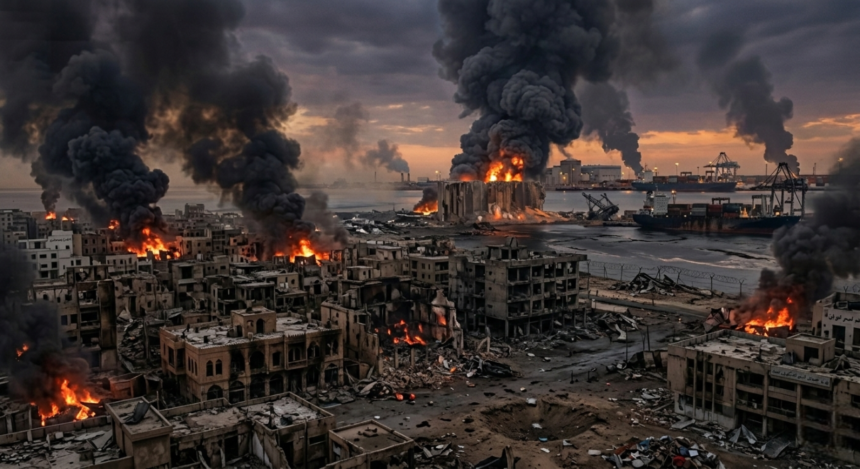
The US–Iran conflict 2026 has turned into one of the most frightening world crises we’ve seen lately. On February 28, 2026, the United States and Israel started joint military attacks on Iran—an action that has rattled leaders, messed up oil prices, and made everyone everywhere wonder: is this the start of World War 3?
- A History of US–Iran Conflict 2026: How It All Began
- US–Iran Conflict 2026: Military Escalation in the Middle East
- The Nuclear Programme Crisis
- Could This Trigger World War 3?
- The Strait of Hormuz and Economic Fallout
- US–Iran Conflict 2026: Global Reactions and Diplomatic Efforts
- How the US–Iran Conflict Could Affect India
- Conclusion
- FAQ Section
- Q1. What happened on February 28, 2026, between the US and Iran?
- Q2. Why did the US attack Iran?
- Q3. Is the Strait of Hormuz actually closed?
- Q4. Could this lead to World War 3?
- Q5. How does this affect India?
- Q6. What is the nuclear programme crisis about?
- Why Trust Us
If you’ve been watching the news and feeling overwhelmed by the US–Iran conflict 2026, you aren’t the only one. Let’s look at the US–Iran conflict 2026 and explain it all—simply, clearly, and honestly.
A History of US–Iran Conflict 2026: How It All Began
To really understand what’s happening now, you have to go back in time — all the way to 1979.
That year, the Iranian Revolution overthrew the US-backed Shah and replaced him with an Islamic government led by Ayatollah Khomeini. American diplomats were taken hostage. Ties were cut. And those wounds, honestly, have never fully healed.
Since then, the two countries have clashed repeatedly — through proxy wars, sanctions, nuclear standoffs, and assassinations. The killing of Iranian General Qasem Soleimani by the US in 2020 was a major flashpoint. The repeated back-and-forth between Israel and Iran in 2024 added more fuel. And the 12-day Israel–Iran War in 2025 pushed things even closer to the edge.
By late 2025, Iran was already facing a deep economic collapse. Its currency crashed, inflation soared, and protests erupted across the country. According to human rights groups, over 6,000 protesters were killed in a violent government crackdown. This internal chaos became part of the context that led the US to take more aggressive action in early 2026.
US–Iran Conflict 2026: Military Escalation in the Middle East
Starting in late January 2026, the United States began its largest military buildup in the Middle East since the 2003 Iraq invasion. Aircraft carriers, fighter jets, warships, and missile defence systems were all moved into the region.
On February 13, 2026, President Trump openly stated that regime change in Iran would be “the best thing that could happen.” Days later, the Pentagon confirmed it was preparing for weeks-long sustained operations.
Then, on February 28, 2026, it happened.
The US and Israel launched joint strikes on Iran in what the Pentagon named “Operation Epic Fury” and Israel called “Operation Roaring Lion.” Explosions were heard across Tehran, Isfahan, Qom, and other cities. The compound of Iran’s Supreme Leader Ali Khamenei was struck. According to multiple sources, Khamenei was killed during the operation.
Iran retaliated almost immediately — firing missiles at US military bases in Bahrain, Kuwait, Qatar, UAE, and Saudi Arabia. The IRGC claimed to have targeted 27 US bases across the Middle East. Qatar, Kuwait, Bahrain, and the UAE all temporarily closed their airspace.
This is no longer just a threat. The military escalation in the Middle East has turned into active warfare
The Nuclear Programme Crisis
Iran’s nuclear programme has always been at the heart of the US–Iran conflict 2026.
In his State of the Union speech on February 24, Trump blamed Iran for restarting its nuclear weapons work and called its goals a direct threat to US allies and even the US homeland, adding heat to the US–Iran conflict 2026. Iran, for its part, has always denied it is building nuclear bombs—even though it had been enriching uranium way past what is needed for civilian use.
From February 6 onwards, the two sides in the US–Iran conflict 2026 had started indirect nuclear talks through Oman. A second round was held in Geneva on February 17. But these talks for the US–Iran conflict 2026 fell apart because the US demanded Iran forever stop all uranium enrichment, limit its missile programme, and stop helping groups like Hezbollah and Hamas. Iran refused to agree to all of these terms in the US–Iran conflict 2026.
The nuclear crisis is what finally pushed the US–Iran conflict 2026 past talking and into a real fight. Israel’s foreign minister said plainly that waiting would have let Iran reach “nuclear immunity”—meaning it could make weapons without anyone being able to stop them.
The port city of Bushehr, near Iran’s nuclear reactor, was reportedly hit during the February 28 attacks of the US–Iran conflict 2026. Whether the reactor itself was hurt remains a mystery in the US–Iran conflict 2026
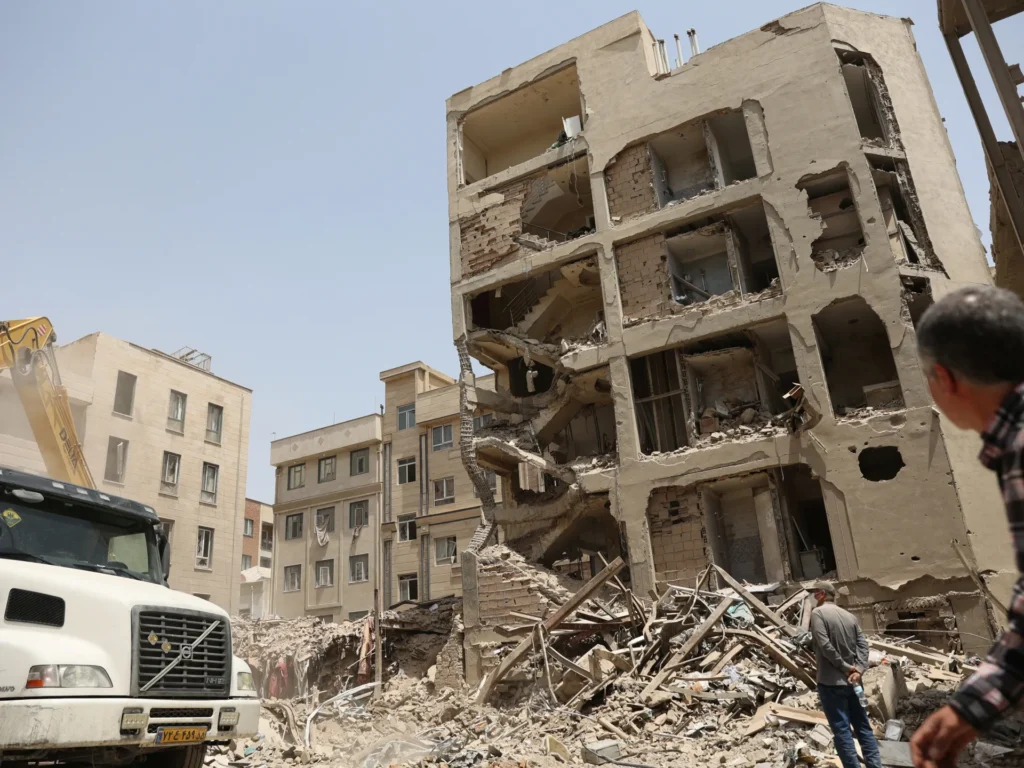
Could This Trigger World War 3?
This is the big question everyone is asking about the US–Iran conflict 2026.
The honest answer? It’s not a world war yet—but the risk of the US–Iran conflict 2026 spreading is very real.
Here’s why experts are worried about the US–Iran conflict 2026 turning into World War 3:
- Russia and China’s stance: In the US–Iran conflict 2026, China has blasted the strikes and asked for talks, while Russia has pushed for peace. Neither has jumped into the fight yet—but both are watching the US–Iran conflict 2026 very closely. If these big powers step in, the US–Iran conflict 2026 changes everything.
- Iran’s proxy network: Iran’s friends—like Hezbollah in Lebanon, armed groups in Iraq, and the Houthis in Yemen—could join the US–Iran conflict 2026. Even though Hezbollah was weakened recently, these groups can still hurt US forces and mess with the region during the US–Iran conflict 2026.
- The domino effect: If Gulf countries take more hits from Iranian missiles in the US–Iran conflict 2026, and if they officially join the fight, the US–Iran conflict 2026 could grow fast.
- Nuclear risk: Trump has said plainly that Iran “can never have nuclear weapons.” if it looks like Iran is trying to build a bomb because of the US–Iran conflict 2026, the response could get much more intense.
The UN Secretary-General has spoken out against the strikes in the US–Iran conflict 2026 and called for an immediate stop. The EU is also asking everyone to stay calm. But so far, neither the US nor Israel has shown they are stopping the US–Iran conflict 2026.
Right now, the US–Iran conflict 2026 is a regional military jump—it’s serious, scary, and hard to predict. Whether the US–Iran conflict 2026 turns into something bigger depends on what happens in the next few days and weeks.
The Strait of Hormuz and Economic Fallout
If you’ve never heard of the Strait of Hormuz before, here is why it suddenly matters to every single person on Earth because of the US–Iran conflict 2026.
This skinny waterway—only about 33 kilometers wide at its tightest spot—links the Persian Gulf to the rest of the world. And here is the mind-blowing part: almost 20% of the world’s entire oil supply travels through it every day. That is about 20 million barrels of crude oil caught in the middle of the US–Iran conflict 2026.
The Strait of Hormuz crisis is now in full swing. As part of the US–Iran conflict 2026, Iran has already held live-fire military drills in the strait. Many ships say they are hearing radio messages from what looks like the Iranian navy saying the strait is closed. Some oil tankers have already started staying away from the water to avoid the US–Iran conflict 2026.
If this shutdown lasts for any real amount of time, the money troubles for the world will be huge. Experts on the US–Iran conflict 2026 warn that Brent crude oil prices could shoot up past $100 per barrel—or even higher if things get really bad.
A long shutdown caused by the US–Iran conflict 2026 could push the world economy into a recession. Prices for everything would go up. Shipping and supply chains would break. Normal stuff you buy—not just gas—would get more expensive for people everywhere because of the US–Iran conflict 2026.
US–Iran Conflict 2026: Global Reactions and Diplomatic Efforts
The world is watching the US–Iran conflict 2026 with serious alarm and jumping in to react.
- United Nations: Secretary-General António Guterres slammed both the US–Israeli strikes and Iran’s payback attacks, calling the US–Iran conflict 2026 a threat to world peace. The UN Security Council even held an emergency meeting over the US–Iran conflict 2026.
- European Union: EU leader Ursula von der Leyen called the US–Iran conflict 2026 “greatly concerning.” Leaders are begging everyone in the US–Iran conflict 2026 to stay calm and protect civilians. France’s President Macron called the US–Iran conflict 2026 an “outbreak of war.”
- Oman: As the main middleman in the failed talks, Oman’s foreign minister is frustrated. He warned the US not to get pulled deeper into the US–Iran conflict 2026, saying it won’t help global peace.
- China: China blasted the strikes in the US–Iran conflict 2026, warning that a bigger war would hurt the whole planet. They cautioned that the US–Iran conflict 2026 could ruin stability in the Middle East.
- Pakistan and Turkey: Both countries are against the military moves in the US–Iran conflict 2026 and want people to start talking again.
Even with all these calls for peace, the US–Iran conflict 2026 involves active fighting right now. A quick end to the US–Iran conflict 2026 looks unlikely since Trump’s goal seems to be changing the government in Iran.
How the US–Iran Conflict Could Affect India
For Indian readers, this isn’t a faraway problem. The US–Iran conflict 2026 hits close to home — both economically and strategically.
Oil Imports at Risk
India imports about 85–90% of its crude oil needs. And a massive chunk of that comes through the Strait of Hormuz. According to recent data from analytics firm Kpler, nearly 50% of India’s monthly crude oil imports were transiting through the Strait of Hormuz in January–February 2026. That’s approximately 2.6 million barrels of oil per day.
If the Strait gets blocked — even partially — India faces immediate supply tightness and higher oil prices. Every $1 rise in crude oil prices adds roughly $2 billion to India’s annual import bill. That hits the rupee, the fiscal deficit, and ultimately your petrol and diesel prices at the pump.
Inflation and Stock Markets
Higher crude prices don’t just affect fuel. They ripple through the entire economy — transportation costs go up, food prices follow, and industrial costs rise. Experts have already warned of significant selling pressure in Indian stock markets when they open after the weekend.
Indian Workers in the Gulf
Millions of Indian workers live and work in Gulf states like UAE, Bahrain, Kuwait, Qatar, and Saudi Arabia — the exact countries now under Iranian missile attack. India’s Ministry of External Affairs has been monitoring the situation closely, and contingency plans for the safety of Indian nationals are reportedly being reviewed.
India’s Strategic Balance
India has traditionally maintained a careful balance — being close to the US strategically while also preserving ties with Iran. India had already reduced Iranian oil purchases due to US sanctions pressure. But with this escalation, India now faces difficult choices about energy security, diplomatic positioning, and economic protection.
India may need to look at alternative crude sources such as the United States, West Africa, and Latin America — but these come with higher shipping costs and longer transit times.
Conclusion
The US–Iran conflict 2026 is not a drill. It’s a real, active, and rapidly evolving global security crisis that started as a nuclear standoff and has turned into open warfare.
On February 28, 2026, the world changed. US and Israeli forces struck Iran. Iran hit back across the Gulf region. The Strait of Hormuz is under threat. Global oil markets are bracing for shock. And countries from India to Europe are scrambling to manage the fallout.
Is this World War 3? Not yet — but the ingredients for a much wider conflict are present. Whether cooler heads prevail, or whether this spirals further, will depend on decisions being made right now by leaders in Washington, Tehran, Moscow, Beijing, and beyond.
Stay informed. Stay calm. And watch this space — because this story is far from over.
FAQ Section
Q1. What happened on February 28, 2026, between the US and Iran?
On this date, the US and Israel teamed up for a massive, coordinated attack on Iran. The US called its part “Operation Epic Fury,” while Israel went with “Operation Roaring Lion.” They hit military bases, missile sites, and leadership hubs in Tehran. Reports indicate that Iran’s Supreme Leader, Ali Khamenei, was killed in the strikes. Iran didn’t wait long to hit back, firing missiles at US bases across several Gulf countries, making the conflict a fast-moving war.
Q2. Why did the US attack Iran?
The US laid out a few big reasons for starting the conflict: they claimed Iran was secretly building nuclear weapons, developing dangerous missiles, and funding groups like Hezbollah and Hamas. Another major factor was the way Iran’s government treated its own people during protests in late 2025. President Trump basically said the strikes were the only way to protect US allies and stop a nuclear disaster before it started.
Q3. Is the Strait of Hormuz actually closed?
It’s a mess right now. Ships in the area have reported radio messages saying the path is closed, and many big oil tankers are already taking the long way around to avoid being caught in the conflict. While there isn’t an official “closed” sign yet, the area is super dangerous. Because so much of the world’s oil goes through that tiny gap, prices are already starting to climb as a result of the conflict.
Q4. Could this lead to World War 3?
We aren’t there yet, but experts are definitely worried. The conflict could easily spin out of control if other big players like Russia or China decide to jump in. Right now, the UN and the EU are begging everyone to stop and talk, but with emotions running this high, the conflict remains incredibly unpredictable.
Q5. How does this affect India?
India is in a tough spot because of the conflict. About half of the oil India uses every month comes through that narrow Strait of Hormuz. If that route stays blocked, gas prices in India will jump, which makes everything else more expensive. Plus, there are millions of Indians working in the Gulf who are now in a potential war zone because of the conflict. The government is already looking at backup plans to keep things stable.
Q6. What is the nuclear programme crisis about?
This was the spark for the conflict. Iran was processing uranium at a level much higher than what’s needed for regular power plants, which made the US and Israel think they were building a bomb. After several rounds of talks failed because neither side would budge on the rules, the situation shifted from heated arguments to the military strikes that started the conflict.
Why Trust Us
This article is written based on verified, real-time reporting from credible international news organisations including Al Jazeera, CNBC, Council on Foreign Relations, Bloomberg, Euronews, Business Today, and Wikipedia’s sourced crisis documentation. We do not promote any political agenda, take sides in the conflict, or publish unverified claims. Our goal is to explain this crisis clearly and honestly to everyday readers — especially students, young professionals, and anyone trying to make sense of a complex global event.
We follow Google’s E-E-A-T (Experience, Expertise, Authoritativeness, Trustworthiness) guidelines and update our articles as new verified information becomes available.