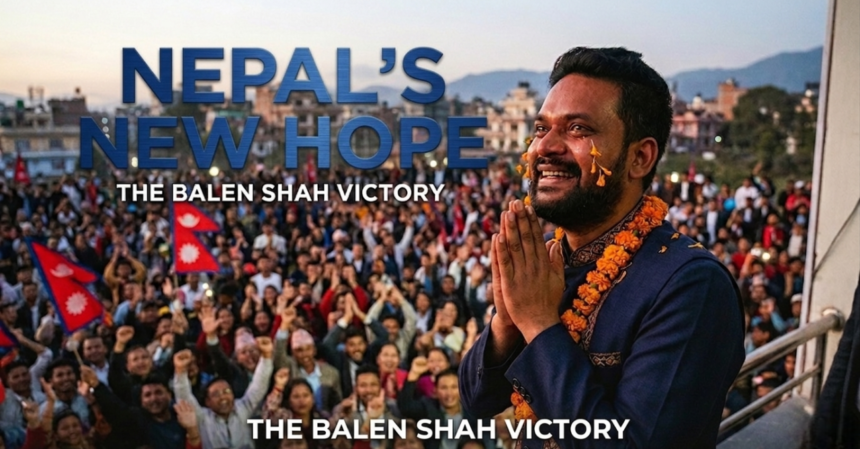
Something historic just happened in Nepal — and the world is watching.
- Nepal Election 2026: What Happened?
- Who Is Balen Shah?
- Why Balen Shah Became So Popular
- He Speaks Like a Real Person
- He Has Actually Done Things
- He Represents a New Nepal
- He Has a Unique Background
- Nepal Election Results 2026: The Numbers So Far
- Rastriya Swatantra Party (RSP) — Balen Shah’s Party
- Nepali Congress (Gagan Thapa’s party)
- CPN-UML (KP Sharma Oli’s party)
- Balen Shah vs. KP Sharma Oli in Jhapa-5
- The Role of Gen Z in Nepal Politics
- What Balen Shah’s Victory Means for Nepal
- A New Face for Leadership
- The Reality Check
- A Historic First from the Plains?
- The War on Graft
- All Eyes from New Delhi
- Final Thoughts
- Frequently Asked Questions (FAQ)
- Q1: Who is Balen Shah?
- Q2: What is the Rastriya Swatantra Party (RSP)?
- Q3: Why did Nepal hold elections in March 2026?
- Q4: What happened in the Balen Shah vs. KP Sharma Oli race in Jhapa-5?
- Q5: Could Balen Shah become the Prime Minister of Nepal?
- Q6: What role did Gen Z play in the Balen Shah Nepal Election 2026?
- Why Trust Us
The Balen Shah Nepal Election 2026 story is not just about one man winning a seat. It is about an entire generation deciding that the old political system no longer works for them. A former rapper, a structural engineer, a city mayor, and now — potentially — a prime minister.
Balendra Shah, popularly known as Balen, is leading the vote count in Jhapa-5 against former Prime Minister KP Sharma Oli. His party, the Rastriya Swatantra Party (RSP), is surging ahead with leads in over 50 seats in Nepal’s general election held on March 5, 2026.
This is a big deal. And if you are wondering how we got here — you are in the right place.
Nepal Election 2026: What Happened?
Nepal held its general election on March 5, 2026 — and it was unlike any election in the country’s recent history.
Nearly 19 million registered voters went to the polls to elect 275 members of the House of Representatives. Voter turnout was estimated between 60 to 68 percent, which is a healthy number given the political chaos of recent months.
So why was this election called in the first place?
Everything changed in September 2025, when massive youth-led protests — widely called the Gen Z protest — rocked Nepal and forced the resignation of Prime Minister KP Sharma Oli, who was 73 years old at the time. The protests turned deadly, with at least 77 people killed in clashes with security forces.
Following the constitutional crisis, Sushila Karki, a former Chief Justice, was appointed as the interim Prime Minister — making her the first woman to lead Nepal’s government. Her sole task was to stabilize the country and hold free elections within six months.
The election was held under that strict timeline. It was only for the federal House of Representatives, not for provincial assemblies, which were not dissolved during the crisis.
A total of 65 political parties fielded candidates, with 3,406 candidates competing across 165 directly elected constituencies using the First Past the Post (FPTP) system. An additional 110 seats are allocated via proportional representation.
Who Is Balen Shah?
Before we talk about the election results, let us understand the man at the center of it all.
Balendra Shah, known to everyone simply as Balen, was born on April 27, 1990, in Naradevi, Kathmandu. He comes from a family of Maithili origin — his father, Ram Narayan Shah, was an Ayurvedic practitioner who moved to Kathmandu from Mahottari District.
Balen is, first and foremost, a deeply educated man.
He completed his bachelor’s degree in Civil Engineering from Himalayan Whitehouse International College in Kathmandu. He then went on to earn a Master’s degree (MTech) in Structural Engineering from Visvesvaraya Technological University (VTU) in Karnataka, India. He is also currently pursuing a PhD in Civil Engineering from Kathmandu University, researching the conservation of Newa heritage structures.
But education is only part of his story.
From Rap Battles to Headlines
In 2012, Balen released his first rap single, “Sadak Balak” (Street Boy) — a track he had written back in ninth grade. The song resonated deeply with Nepal’s youth.
His big moment came in 2013, when he appeared on Raw Barz, Nepal’s famous YouTube battle rap series. Almost overnight, he became one of the most recognized faces in Nepal’s Nephop (Nepali hip-hop) scene.
His music was never just entertainment. Songs like Balidan (Sacrifice) spoke about corruption, inequality, and the struggles of everyday Nepalis. He used rap as a way to say things that traditional politicians never dared to.
Becoming Mayor of Kathmandu
In 2022, Balen Shah did something nobody really expected. He ran for Mayor of Kathmandu — as an independent candidate with no party backing.
He won. By a huge margin.
He secured 61,767 votes, defeating Srijana Singh of the Nepali Congress and former Mayor Keshav Sthapit of the CPN-UML by more than 23,000 votes. He became the first independent candidate to win the Kathmandu mayor’s race.
As mayor, his work was bold and often controversial. He:
- Introduced live telecasts of municipal council meetings for full transparency
- Launched a large-scale demolition drive against illegal structures
- Tackled Kathmandu’s waste management crisis head-on
- Started the “Textbook-Free Friday” program in community schools
- Mandated private schools to offer scholarships to at least 10% of students
In September 2023, he was named to TIME magazine’s Next 100 list — a recognition of his impact as a young leader in Asia.
Joining the Rastriya Swatantra Party
In January 2026, Balen resigned from his mayor’s post and joined the Rastriya Swatantra Party (RSP) — a relatively new centrist party founded in 2022, led by former television presenter Rabi Lamichhane.
The RSP signed an agreement declaring Balen as its prime ministerial candidate. He chose to contest from Jhapa-5 — notably, the home constituency and stronghold of former PM KP Sharma Oli.
That matchup became the most talked-about battle of the entire election.
Why Balen Shah Became So Popular
There is no simple answer to this. Balen’s popularity is the result of several things coming together at exactly the right moment.
He Speaks Like a Real Person
Most Nepali politicians speak in the language of old textbooks and party manifestos. Balen speaks like someone you could actually have a conversation with. His social media presence is huge, and he communicates directly with young people in a way that feels authentic, not rehearsed.
He Has Actually Done Things
Unlike many politicians who only make promises, Balen had a track record to point to. As Kathmandu’s mayor, he physically showed up at demolition sites. He dumped garbage outside government offices when the central government refused to cooperate on waste management. These are things people remembered.
He Represents a New Nepal
Nepal’s traditional political leaders are overwhelmingly in their 60s and 70s. Balen is 35. More importantly, over 40 percent of Nepal’s population is under the age of 35. For millions of young Nepalis, Balen represents the idea that someone like them can actually lead the country.
As one political journalist put it, young Nepalis see him as a decisive actor who is not tied to traditional political or business interests.
He Has a Unique Background
How many politicians in South Asia have gone from engineering school to rap battles to city hall to a prime ministerial run? That unique journey makes him someone people are genuinely curious about — and it signals that he is not just another career politician who has been waiting in line for power.
Nepal Election Results 2026: The Numbers So Far
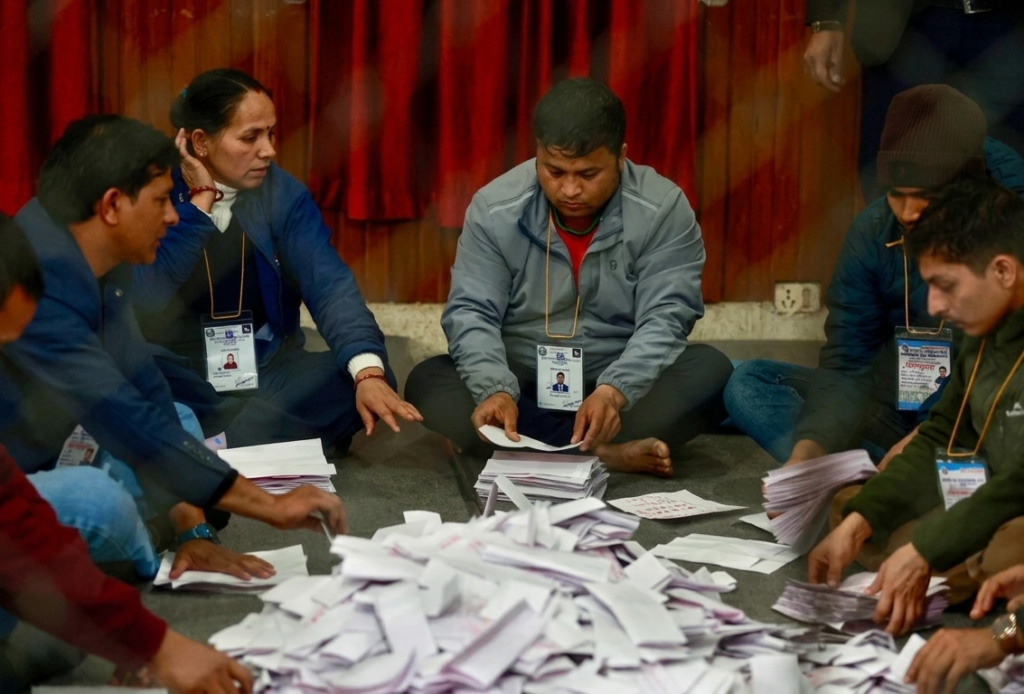
Vote counting began late on the night of March 5, 2026, and results have been coming in throughout March 6.
Here is what the early picture looks like:
Rastriya Swatantra Party (RSP) — Balen Shah’s Party
- Seats won: 1 (as of early count)
- Seats leading in: 50+ constituencies and rising
- Strong leads across Kathmandu constituencies including Kathmandu-1, 2, 3, 4, 5, 7, 8, and 10
- Also leading in Bhaktapur, Morang, Dhanusha, Rautahat, Lalitpur, Kaski, and other districts
Nepali Congress (Gagan Thapa’s party)
- Leading in approximately 5 seats
CPN-UML (KP Sharma Oli’s party)
- Leading in approximately 4 seats
Balen Shah vs. KP Sharma Oli in Jhapa-5
This is the race everyone has been watching. Early figures showed Balen with 1,478 votes compared to Oli’s 385 votes from the first batches counted. Balen was leading by approximately 1,100 votes in early trends — and Jhapa-5 has historically been considered an Oli stronghold.
The Election Commission anticipated completing the full tally by Friday night, with final results possibly taking up to a week for all constituencies.
India’s Ministry of External Affairs offered a statement congratulating Interim PM Sushila Karki, the government, and the people of Nepal for successfully conducting the polls — noting the enthusiastic democratic participation.
Important note: As this article is written based on early trends, readers should check current news sources for the final confirmed results.
The Role of Gen Z in Nepal Politics
It’s impossible to discuss the 2026 Nepal Elections without talking about the generation that fundamentally rewrote the rules of the game. This wasn’t just a change in leadership; it was a total shift in the country’s DNA.
The Spark: September 2025
To understand today’s results, you have to look back at the chaos of last September. Nepal saw something it hadn’t seen in decades: a massive wave of teenagers, students, and young professionals flooding the streets. They weren’t just “protesting”; they were demanding a future that wasn’t being auctioned off to the highest bidder.
Fueled by years of blatant corruption and an economy that felt rigged against them, the movement grew until it reached a breaking point. When security forces opened fire, killing at least 77 people, the national mood shifted from frustration to pure defiance. The pressure became unbearable for the establishment, leading to the historic collapse and resignation of Prime Minister KP Sharma Oli.
Why Gen Z Put Their Faith in Balen
After the smoke cleared, the anger didn’t just vanish—it migrated to the ballot box. For a generation tired of the same old faces, Balen Shah and the RSP (Rashtriya Swatantra Party) weren’t just another political option; they were the only ones who actually spoke their language.
Balen didn’t just show up for the election; he was there during the protests, echoing the frustrations of the street. Between his background in hip-hop and his “no-nonsense” social media presence, he felt authentic in a way traditional politicians never could. The numbers tell the story: voter registration didn’t just grow; it exploded, specifically among first-time voters. By the time the RSP officially kicked off its campaign in Janakpur this past January, the momentum was already unstoppable.
Breaking the Three-Party Monopoly
For as long as most people can remember, Nepali politics was a three-way tug-of-war between the Nepali Congress, the UML, and the Maoists. These parties had the money, the history, and the muscle.
But 2026 proved that those old machines are rusting out. The fact that the RSP—a party that didn’t even exist a few years ago—is set to become the largest force in the House of Representatives is a massive wake-up call. It shows that the “old way” of doing business is officially over, and the youth are the ones now holding the pen.
What Balen Shah’s Victory Means for Nepal
No matter how the final numbers shake out, the sheer impact of this election is already undeniable. It has fundamentally shifted the conversation around what it means to lead in Nepal.
A New Face for Leadership
If Balen Shah actually takes the seat of Prime Minister, he’ll be one of the youngest to ever do it. But the real story isn’t just his age—it’s how he got there. He didn’t spend decades climbing a party ladder or navigating backroom deals. He built a national platform through rap, engineering, and independent civic work.
His rise sends a clear signal to every young person in Nepal: the old “gatekeepers” of politics are losing their grip. You don’t need a dynasty or a decades-old party machine to be heard anymore; you can build your own path.
The Reality Check
We have to be realistic, though: winning a campaign and running a country are two very different beasts. Balen is stepping into a minefield of challenges. Nepal is currently navigating:
- Economic recovery after a year of intense political trauma.
- Decaying infrastructure that needs urgent attention.
- Geopolitical tightropes between two massive neighbors, India and China.
- Restoring public trust in a system many feel has abandoned them.
Balen has admitted that national governance is a heavy lift. Since the RSP likely won’t have a total majority, he’ll have to master the art of the coalition—negotiating and compromising with the very “establishment” he campaigned against.
A Historic First from the Plains?
There’s also a major cultural milestone at play. The RSP has championed Balen as a potential Prime Minister from the Madhesh (the Terai plains). If he wins, it would be a massive moment for a region that has often felt like an afterthought to the power brokers in Kathmandu. It’s a move that seeks to bridge the gap between the capital and the plains.
The War on Graft
As Mayor of Kathmandu, Balen’s brand was built on a simple premise: corruption is the enemy. He tore down illegal structures and aired council meetings live, refusing to play the usual patronage games. If he scales that “no-nonsense” approach to the national level, it could finally start to dismantle the systemic bribery that has held the country back for years.
All Eyes from New Delhi
Naturally, India is watching this very closely. Given our shared borders and deep cultural ties, the Ministry of External Affairs was quick to acknowledge the democratic process. How a Balen-led government handles regional diplomacy—balancing interests without being “bought” by any side—will be the most watched political drama in South Asia for the foreseeable future.
Final Thoughts
The Balen Shah Nepal Election 2026 story is one of the most compelling political narratives in South Asia right now.
A man who started out writing rap verses about corruption and street life has ended up directly challenging a former prime minister on his own home turf — and winning, if the early results hold.
But what makes this truly significant is not just Balen Shah the individual. It is what his rise represents: that millions of young Nepalis refused to accept the status quo. They protested on the streets. They registered to vote. And they showed up.
Whether Balen Shah can convert this election momentum into stable, effective national governance remains to be seen. The hard work starts now. But one thing is already certain — Nepal’s politics will never quite look the same again.
Stay updated — bookmark this page or follow our blog for the latest on Nepal election results 2026 and Balen Shah’s political journey.
Frequently Asked Questions (FAQ)
Q1: Who is Balen Shah?
Balendra Shah, popularly known as Balen, is a structural engineer and former hip-hop artist who shook the political establishment by becoming the first independent Mayor of Kathmandu in 2022. For the Balen Shah Nepal Election 2026, he officially joined the Rastriya Swatantra Party (RSP) as its senior leader and prime ministerial face. His brand in the Balen Shah Nepal Election 2026 is built on “no-nonsense” governance and direct communication via social media.
Q2: What is the Rastriya Swatantra Party (RSP)?
The RSP, symbolized by the “bell” on the ballot, is a centrist party that has become the primary vehicle for change in the Balen Shah Nepal Election 2026. Founded by Rabi Lamichhane, the party merged with Balen’s movement to create a powerhouse for the Balen Shah Nepal Election 2026. Early results from the Balen Shah Nepal Election 2026 show the RSP leading in approximately 50 to 60 seats, a massive jump from its previous standing.
Q3: Why did Nepal hold elections in March 2026?
The Balen Shah Nepal Election 2026 was triggered by the “September Revolution” of 2025. Massive youth protests against corruption and economic failure forced the resignation of KP Sharma Oli. This led to a constitutional reset and the scheduling of the Balen Shah Nepal Election 2026 for March 5, 2026, overseen by an interim government led by Sushila Karki.
Q4: What happened in the Balen Shah vs. KP Sharma Oli race in Jhapa-5?
One of the most intense battles of the Balen Shah Nepal Election 2026 took place in Jhapa-5. This constituency, a long-time stronghold for veteran leader KP Sharma Oli, saw a direct challenge from Balen Shah. Current tallies from the Balen Shah Nepal Election 2026 show Balen Shah holding a commanding lead, with over 10,100 votes compared to Oli’s 4,000+, signaling a potential upset of a political titan.
Q5: Could Balen Shah become the Prime Minister of Nepal?
The possibility of Balen Shah becoming Prime Minister is the central question of the Balen Shah Nepal Election 2026. While the RSP is performing exceptionally well, the Balen Shah Nepal Election 2026 results suggest no single party will hit the 138-seat majority alone. This means the outcome of the Balen Shah Nepal Election 2026 will likely lead to coalition talks where Balen Shah would need to secure support from other parties to lead the country.
Q6: What role did Gen Z play in the Balen Shah Nepal Election 2026?
Gen Z is widely considered the “architect” of the Balen Shah Nepal Election 2026. After toppling the previous government in 2025, young voters turned out in record numbers to support the Balen Shah Nepal Election 2026 movement. Their rejection of traditional “old guard” parties and their digital-first campaigning style have fundamentally redefined how the Balen Shah Nepal Election 2026 was fought and won.
Why Trust Us
This report provides verified data on the 2026 Nepal General Election, sourced from Al Jazeera, The Kathmandu Post, and other credible outlets. We avoid speculation, focusing solely on established facts and official trends.
- Current Trends: As of March 6, 2026, the Rastriya Swatantra Party (RSP) holds a significant lead in early counting.
- Official Data: Readers should verify final tallies through the Election Commission of Nepal.
- Standards: We strictly follow E-E-A-T guidelines to ensure transparency and accuracy.