If you are working at a big company and thinking that artificial intelligence is just a passing trend, you might want to reconsider. Accenture CEO Julie Sweet has made something very clear, if you do not learn AI skills, do not expect a promotion. This is not just a suggestion. It is now part of how Accenture evaluates and rewards its employees.
- What Did Julie Sweet Actually Say?
- Understanding the Accenture AI Policy
- Accenture’s Massive Investment in Artificial Intelligence
- Why AI Skills Are Becoming Essential for Every Job
- How Companies Are Transforming the Workplace with AI
- Concerns and Debate Around AI Expectations at Work
- The Future of Work in the AI Era
- Conclusion
- FAQ Section
- Why Trust Us
The Julie Sweet AI promotion rule has caught the attention of professionals, students, and business leaders around the world. It signals a major shift in how the corporate world is starting to think about talent, growth, and the future of work.
In this article, we will break down exactly what Julie Sweet said, what it means for workers everywhere, and how companies like Accenture are building an AI-first workplace from the ground up.
What Did Julie Sweet Actually Say?
Julie Sweet, the leader of Accenture, recently sparked a massive conversation across the business world with a blunt ultimatum. She made it clear that climbing the corporate ladder now requires a specific set of modern tools. Essentially, if you aren’t actively learning and applying machine intelligence to your daily tasks, you can say goodbye to moving up. This Julie Sweet AI promotion rule signals a permanent shift in how professional success is measured in the modern era.
For Sweet, these advanced digital tools aren’t just a trendy hobby for the tech team; they are as vital as knowing how to read a spreadsheet or write an email. She believes that staying relevant in your career means evolving alongside technology. Her message is a wake-up call: adapt your habits now or risk watching your peers pass you by. This perspective is quickly becoming the standard for major global firms.
By enforcing the Julie Sweet AI promotion rule, Accenture is highlighting that every single department—from HR and marketing to finance—must now embrace automation and data-driven insights. It is no longer enough to just be good at your traditional role. To get ahead, you must prove you can work effectively with these new systems. The era of seeing tech as an “optional” skill is officially over. Today, being tech-savvy is simply part of the basic job description for anyone who wants to grow.
Understanding the Accenture AI Policy
The leadership at Accenture has officially turned the corporate ladder into a high-tech climb. Their latest internal strategy makes one thing very clear: if you want to move up, you have to move toward automation. This isn’t just a suggestion or a side project; it’s a core requirement for anyone looking to advance. By making the Julie Sweet AI promotion rule a reality, the company is tying your future paycheck and title directly to how well you handle new digital tools.
To stay in the running for growth, staff members must now dive into specialized training and, more importantly, prove they are using these systems to get better results. During every performance check-in, managers will be looking for concrete evidence of these skills. It’s a bold shift, but from the top down, the belief is that staying competitive requires a workforce that lives and breathes modern tech.
This move is the result of years of heavy investment in shifting the company’s DNA. For everyone on the team, the Julie Sweet AI promotion rule means the days of “learning a job once” are over. Education is now a permanent part of the daily grind. Whether you are in human resources or deep in the finance department, showing that you can evolve alongside these rapid changes is now the only way to secure your spot at the next level.

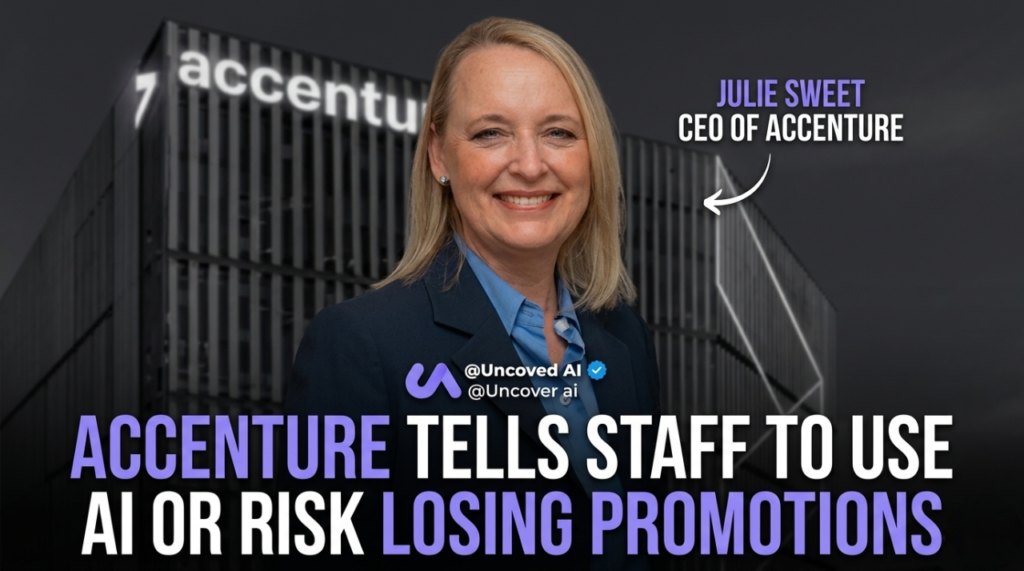
Accenture’s Massive Investment in Artificial Intelligence
The shift at Accenture reflects a massive financial and cultural bet on the future of work. Here is a breakdown of why the Julie Sweet AI promotion rule is now the cornerstone of their business strategy:
- A Multi-Billion Dollar Commitment: The company has poured over three billion dollars into modernizing its capabilities. This isn’t a minor test; it’s a total overhaul that includes buying up specialized tech firms and building custom internal tools.
- Practicing What They Preach: You cannot effectively sell high-tech transformation to global clients if your own team isn’t using those very tools. The Julie Sweet AI promotion rule ensures that every consultant is a living example of the efficiency they promise to customers.
- Beyond the Tech Department: This strategy isn’t just for developers. Whether you work in human resources, finance, or marketing, the expectation is that you will use these new systems to automate the boring stuff and focus on higher-level problem-solving.
- The New Baseline for Success: In the eyes of leadership, being tech-savvy is no longer a “bonus” trait. It is now a fundamental requirement. If you aren’t showing progress in these areas, you simply won’t be in the conversation for the next big step in your career.
- A Permanent Cultural Shift: This investment proves that the company is playing the long game. They are building their entire future on this foundation, and they expect every single employee to be an active part of that transition.
Why AI Skills Are Becoming Essential for Every Job
The shift toward requiring digital literacy across all departments might feel intense, but it stems from a simple reality: these new tools are no longer just for the IT department. Whether you are drafting a client email, organizing a massive spreadsheet, or designing a layout, modern automation can handle the heavy lifting. These systems are now baked into the everyday tasks of sales, marketing, and even legal teams. This universal utility is precisely why the Julie Sweet AI promotion rule is becoming the new standard for everyone, as it recognizes that being tech-savvy is now a requirement for any modern professional.
You don’t need to be a coder to benefit from this change. Learning how to give clear instructions to a system and how to double-check its work is becoming a foundational skill, much like knowing how to use a search engine or a word processor. Companies have realized that staff who embrace these tools are simply more efficient. They can cut down on repetitive “busy work,” stay more organized, and spend their energy on creative problem-solving and big-picture ideas. This boost in personal output makes employees more valuable to their teams and helps them stand out in a crowded market.
While Accenture is being very public about its stance, many other global firms are silently adopting the same mindset. The Julie Sweet AI promotion rule is just the first visible sign of a much larger change in how we define a “qualified” employee. In today’s market, staying relevant means being comfortable with change. Showing that you can adapt to these new digital workflows is the best way to ensure your career doesn’t stall while the rest of the professional world moves forward. It is about future-proofing your path and proving you can thrive in a tech-driven landscape.
How Companies Are Transforming the Workplace with AI
The professional landscape is shifting at a speed we have never seen before, and the primary engine behind this change is the rapid integration of smart automation. Organizations are no longer just adding new tools to their old ways of working; they are completely rebuilding their daily operations with these systems at the heart of everything. This massive shift is the driving force behind the Julie Sweet AI promotion rule, as leadership recognizes that the old ways of doing business simply won’t cut it anymore. From high-level strategy to daily tasks, the way we define a successful career is being rewritten in real time.
We see this transformation everywhere, especially in how specific roles are evolving. In customer support, for instance, basic questions are now handled by automated systems, allowing people to focus on much more complex and meaningful human interactions. Similarly, in the creative and analytical fields, those who know how to partner with these systems to draft content or analyze data are becoming far more effective than their peers. Because these changes are happening in every sector—from finance to healthcare—the Julie Sweet AI promotion rule isn’t just a corporate policy; it’s a reflection of the new global standard for the modern workforce.
For anyone looking to grow, staying up to date with these advancements is no longer an optional side project. It is now the most important thing you can do to keep your skills sharp and your profile attractive to any employer. The Julie Sweet AI promotion rule highlights a simple truth: the future of work has already arrived. To stay valuable in this competitive market, you must prove that you can thrive alongside these new technologies. Those who embrace this evolution will find themselves leading the way, while those who hesitate risk being left in the past.
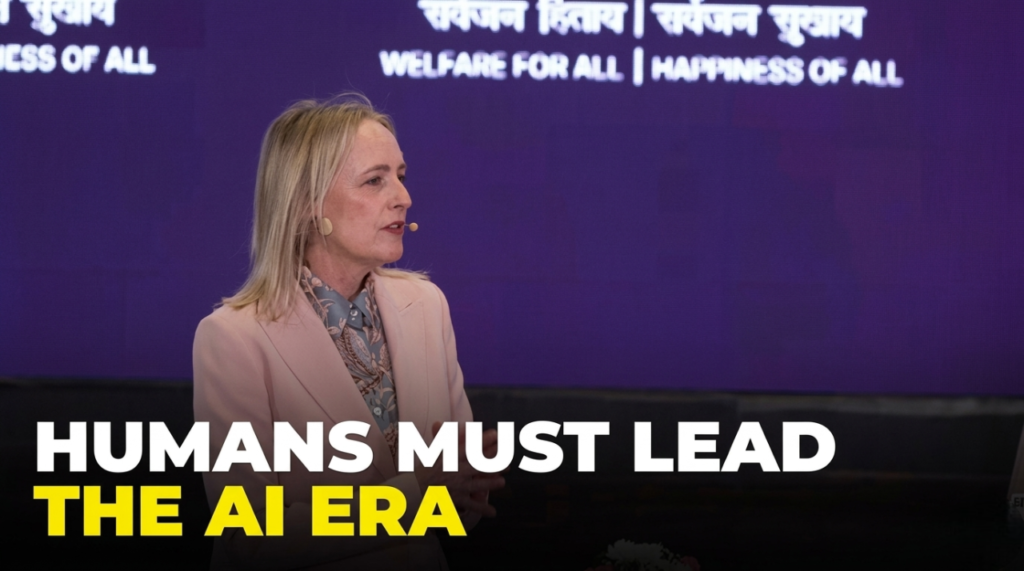
Concerns and Debate Around AI Expectations at Work
While some companies are racing toward a digital-first future, many people are feeling understandably uneasy about this shift. The Julie Sweet AI promotion rule has started a heated conversation about what is actually fair in a modern office. There is a very real worry that making these technical skills a requirement for moving up might leave behind some of our most experienced colleagues. Whether it’s someone who didn’t grow up with a tablet in their hand or someone who simply doesn’t have the extra time for intense retraining, the Julie Sweet AI promotion rule could accidentally create a divide where only a specific group of people gets to succeed.
Beyond just the fairness of it all, there is a deep sense of worry regarding what this means for our long-term stability. If the Julie Sweet AI promotion rule becomes the norm everywhere, it’s only natural to ask: “Is my actual job eventually going to disappear?” Many feel that instead of leadership just handing down a Julie Sweet AI promotion rule that feels like a “do it or else” ultimatum, they should be offering real patience, better resources, and a helping hand. People aren’t robots, and learning entirely new ways of working takes more than just a corporate memo; it takes genuine empathy and support.
However, some people see a silver lining in this bluntness. They argue that the Julie Sweet AI promotion rule is better than the alternative—which is companies quietly passing people over for promotions without ever explaining why. By being open about the Julie Sweet AI promotion rule, at least everyone knows exactly where they stand and what the path forward looks like. As we all navigate this changing world, the real test for any leader will be figuring out how to respect the Julie Sweet AI promotion rule while still treating their team like human beings who have lives and concerns outside of a computer screen.
The Future of Work in the AI Era
The way we work is shifting much faster than anyone could have guessed just a few years ago. Smart technology isn’t just a side project anymore; it is becoming the very foundation of the modern workplace. Here is a look at what this new landscape means for your future:
- A New Kind of Teamwork: In the near future, almost every role will change. Some repetitive chores will be handled entirely by software, while other tasks will become a partnership between human creativity and digital speed. We are even seeing the birth of jobs that didn’t exist six months ago.
- Strategy Over Coding: You don’t need to be a math genius to succeed. The most sought-after people will be those who know how to use these tools strategically—knowing which questions to ask, how to double-check the results, and how to make better decisions using the data provided.
- The Julie Sweet AI promotion rule as a Roadmap: This policy is essentially a head start. By making these skills a requirement for moving up, the goal is to make sure the team is ready for the real world before it arrives, rather than playing catch-up later.
- An Even Playing Field: This is a unique moment for students and those just starting out. Because these tools are so new, everyone is essentially a beginner. If you are willing to dive in and practice, you can quickly become an expert, regardless of what you studied in school.
- An Open Invitation: Ultimately, the Julie Sweet AI promotion rule is a call to action. It’s an encouragement to stop viewing technology as a threat and start seeing it as a way to build a more secure, exciting, and long-lasting career.
Conclusion
The message from leadership at the top is loud and clear, and it’s something none of us can really afford to look past. If you’re aiming to move up in your career—whether you’re at a giant firm or a small local business—getting comfortable with modern tech is no longer just an “extra” you can skip.
The Julie Sweet AI promotion rule isn’t actually about making things harder for people or looking for reasons to hold them back. Instead, it’s a push to make sure everyone is ready for a world that is already shifting right under our feet. The companies that take the time to help their people learn these tools today are the ones that are going to be leading the way tomorrow.
It doesn’t matter if you’re a student just starting your journey, someone right in the middle of your career, or a seasoned professional with years of experience; the advice remains exactly the same. You don’t need to go back to school to become a technical genius or a data scientist. What really matters is having the heart to keep learning and the flexibility to change how you do things.
That willingness to adapt has always been the secret to a long and successful career, and in this new era, that truth is more important than it has ever been. By leaning into these changes now, you’re essentially making a promise to yourself that you’ll stay relevant and ready for whatever comes next.

FAQ Section
Q1. What is the Julie Sweet AI promotion rule? It is a new standard at Accenture where moving up the career ladder requires proving you can work with modern tech. Under the Julie Sweet AI promotion rule, if you aren’t learning to use these new tools, you simply won’t be in the running for a higher position.
Q2. What exactly is the Accenture AI policy? This policy makes digital literacy a core part of your job. Your performance reviews and chances for growth now depend on how well you’ve learned and used new systems in your daily work. Because of the Julie Sweet AI promotion rule, showing real results with technology is now a basic requirement for every department.
Q3. Why did Julie Sweet make this statement about AI? The company has bet billions on a tech-driven future and needs a team that actually knows how to use the tools they sell to clients. The Julie Sweet AI promotion rule ensures that every employee is moving in the same direction as the company’s massive financial investments.
Q4. What AI skills for jobs are most in demand today? The most valuable skills aren’t just for coders; they include knowing how to give clear instructions to a system and using automation to speed up your daily chores. Under the Julie Sweet AI promotion rule, the focus is on being a “smart user” who uses tech to solve problems more creatively.
Q5. Is the future of work AI replacing human jobs? It is more about a partnership than a replacement. The Julie Sweet AI promotion rule highlights that while boring tasks might be automated, new roles are being born where humans manage and guide the tech. The Julie Sweet AI promotion rule aims to turn workers into strategists rather than just task-takers.
Q6. Are other companies following Accenture’s AI strategy? Yes. While the Julie Sweet AI promotion rule is the most public example, many other global firms are quietly adopting the same mindset. The Julie Sweet AI promotion rule has become a blueprint for how most major companies now expect their staff to stay relevant.
Why Trust Us
This content is based on public statements from Accenture’s leadership and widely respected business news sources. Every detail, including financial figures and internal strategies, comes from verified reporting. Our aim is to provide an honest, balanced look at how the modern workplace is evolving.
- Factual Integrity: All data points are sourced from credible international business publications.
- Neutral Perspective: We do not endorse any specific corporation or tech product.
- Educational Focus: This overview is designed to help you navigate current shifts in professional standards.
The goal is simply to offer clear insights into how technology is reshaping career growth. By staying informed on these developments, you can better understand the changing expectations in the global job market.