


Every year on March 4, we celebrate National Safety Day in India. But it’s not just a day; it’s an important time to remind ourselves of our lives. Safety is not just about following the rules — it’s our own responsibility.
- When is National Safety Day celebrated?
- Why is National Safety Day more important than ever?
- How did this movement start?
- What is the theme of National Safety Day 2026?
- Big thoughts on safety in India today
- How is National Safety Day celebrated in India?
- A short message for National Safety Day 2026
- Conclusion
- Frequently Asked Questions (FAQ) – Questions and Answers in Simple Language
- Why can you trust this article?
No matter where we are — working in an office, riding a bike on the road, riding a bus, or spending time with our family at home — our safety and the safety of those around us should always come first. A small carelessness can lead to a big accident.
National Safety Day 2026 gives us a chance to stop and think —
Are we really aware enough?
Are we being properly vigilant for the safety of ourselves and our families?
In this blog, we will know the history of this day, why it is so important, what is the theme for 2026, and how we can celebrate this day in a very simple way. Because in the end, safety is not just a slogan — it should be our daily habit.
When is National Safety Day celebrated?
National Safety Day is celebrated every year on March 4 in India. This date was not chosen randomly. On this day, March 4, 1966, the National Safety Council of India (NSCI) was established. Therefore, this day is also associated with the history of safety awareness in our country.
It is not all over in just one day. National Safety Week is celebrated for a whole week from March 4 to March 10. During this time, safety awareness campaigns and programs are held in various places across the country.
Offices, factories, schools, government offices — everyone uses this time to make people more aware of safety. Somewhere seminars are held, somewhere poster campaigns, and somewhere again safety drills. The main objective is one: to reduce accidents and save lives.
Let’s take a closer look
- National Safety Day: March 4th (every year)
- National Safety Week: March 4th – March 10th
- Organizer: National Safety Council of India (NSCI)
- NSCI Established: March 4th, 1966
The bottom line is one day is fine to think about safety, but it is important to be aware all year round.
Why is National Safety Day more important than ever?
India is moving forward very quickly. New factories are being built, roads are being expanded, tall buildings are being built, and the number of people is increasing. Development is a good thing, but with it, risks have also increased.
Every year, we see how many workplace accidents, how many road accidents, and how many fires occur—just by opening the newspaper. Government reports say that thousands of people lose their lives in the workplace every year in India, and millions die in road accidents.
But these are not just numbers; some of them are fathers, some mothers, some sons, and some daughters. An accident means the breakup of an entire family.
Do you know what the saddest thing is?
Most of these accidents could have been avoided.
A helmet, a safety glove, a properly installed signboard, a working fire extinguisher — these few things can save a life. A small good habit can prevent a big danger.
National Safety Day reminds us of that. It is not just for March 4th. This teaches us we need to be serious about safety every day.
Whether it’s an individual, a company, or a government—everyone needs to take responsibility. Because in the end, safety isn’t just about following the rules. It’s about helping someone’s family get home safely.
How did this movement start?
The story of National Safety Day began in 1966. On March 4, the Indian government formed the National Safety Council of India (NSCI) under the Ministry of Labour and Employment. At that time, the main goal was very clear — to increase safety in the workplace and reduce industrial accidents.
NSCI was created to build a “safety culture.” That means not just making rules, but also making people follow safety on their own—to create that habit. And in honor of this founding day, March 4 was declared National Safety Day.
Initially, it was mainly limited to industrial and factory safety. But with time, this day has become a big movement. Now not only factories —
- Road safety
- Fire safety
- School safety
- Public safety
- Even cybersecurity
Everything has come under its purview.
For more than 50 years, NSCI has been regularly celebrating National Safety Day and National Safety Week. Just imagine, this awareness campaign that has been going on for so many years has now become one of the longest-running safety campaigns in the country.
It’s not just a day; it’s an ongoing movement with one goal—to keep people safe, every day.
What is the theme of National Safety Day 2026?
Every year, the National Safety Council of India (NSCI) announces an official theme for National Safety Day and National Safety Week. This theme determines which safety issues will be of more importance across the country that year.
National Safety Day 2026 Theme:
“Safety Leadership for ESG Excellence”
What does this theme mean?
This year’s theme gives a very important message —
Safety is not only the responsibility of employees; it is also the responsibility of leadership.
That is, a safety culture will be created in a company only when the top leaders themselves take it seriously. From the CEO to the team manager, everyone has to set an example from the front.
Here is another big word — ESG (Environmental, Social, and Governance). In simple terms, a business should not only make a profit; it should also take responsibility for the environment, society, and following the right rules. And safety is a very big part of that responsibility.
This theme teaches us —
Safety should not be just about compliance or a check mark on a paper.
Safety should be a value, a habit.
The 2026 theme is actually a clear message to leaders —
“Workers will be safe only when you step up.”
Because the truth is, when a leader embraces safety, the entire team follows suit. And that’s when a truly safe and responsible work culture is created.
Big thoughts on safety in India today
National Safety Day 2026 is not just a day — it is an opportunity to look at the big safety problems of our country. Let’s take a simple look at them one by one
Road Safety

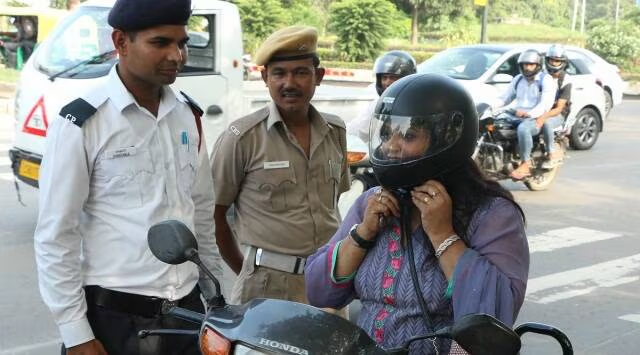
The number of road accidents in India is very high. According to the report of the Ministry of Road Transport and Highways, more than 1.5 lakh people lose their lives in road accidents every year.
We almost all know the reasons —
Overspeeding, drunk driving, not wearing a helmet, not fastening seatbelts, and driving while looking at mobile phones.
But the question is, are we changing?
During National Safety Week, awareness campaigns at various places, police checking, helmet drives, road safety classes in schools — all these are attempts to change people’s habits. Because a helmet can save a family from being broken.
Workplace Safety

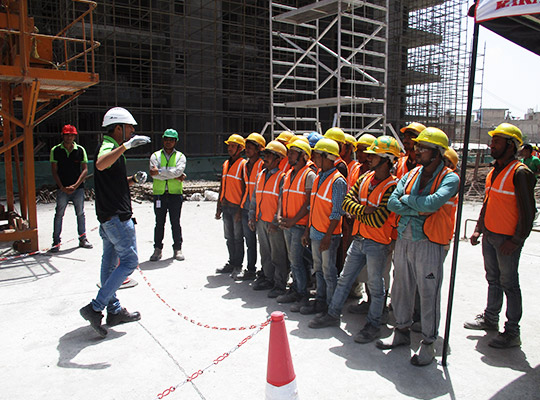
Many accidents happen every year in factories, mines, and construction sites in India. Some fall, some get hit by machines, some get hit by chemicals.
The Factories Act, 1948, has safety rules, but are they being followed properly everywhere? That is the challenge.
National Safety Day reminds industrial establishments —
Check their safety systems, audit them, and retrain their employees. Because that is the real goal so that everyone can return home safely after work.
Fire Safety –

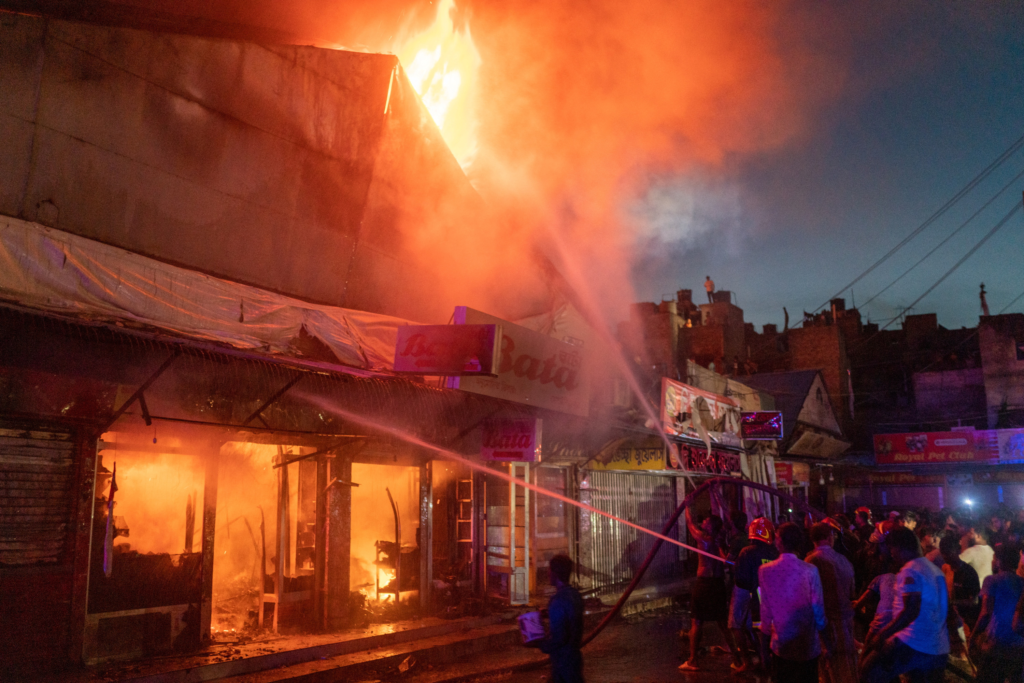
Markets, offices, schools, hospitals—fire incidents are nothing new. Many times the reasons are very simple — bad electrical wiring, lack of fire extinguishers, or closed emergency exits.
A small negligence can lead to big danger.
During this time, many organizations conduct fire mock drills, fire-extinguishing training is given, and emergency signboards are checked to see if they are in order. These small preparations can prevent big accidents.
School and Public Safety

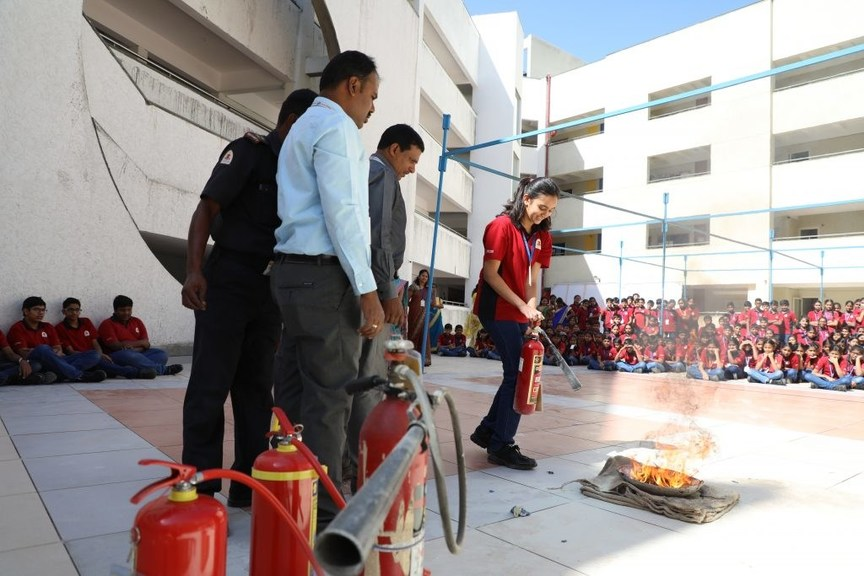
Children have a safe environment—it is their right. Whether the school building is strong, whether there is clean drinking water, whether fire drills are conducted — these are very important.
Public safety also includes crowded markets, buses, trains, stadiums, or large events. Proper crowd management, stampede prevention, clear emergency exits — these are very necessary.
Safety is not a matter of one place. On the road, at work, at school, in the market — wherever we are, we must be aware of safety.
Because accidents happen suddenly…
But many accidents can be avoided if we are aware.
How is National Safety Day celebrated in India?
National Safety Day and the entire National Safety Week that follows it are celebrated in a very beautiful and meaningful way in India. It is not just a formal program — it is actually an attempt to make people think about safety.
Let’s see what is usually done during this time
Safety Pledge Ceremony – In factories, offices, and schools, everyone takes an oath that we will follow safety rules.
Workshops, seminars, training – Employees are taught about safety anew.
Fire Mock Drills and Emergency Practice—What to do in case of a sudden fire or danger is shown in person.
Posters, slogans, and essay competitions—especially in schools and colleges to increase awareness among children.
Safety Audit and Inspection – It is checked whether all the rules are being followed properly in the workplace.
Helmets, reflective jackets, and glove distribution—safety equipment is provided to those who work in the field or on the road.
Social media campaigns—National Safety Day hashtags are used to spread awareness online.
Awards and recognition – Companies or individuals who have done good work in the field of safety are honored.
The purpose behind everything is the same —
that people think about safety, talk about safety, and most importantly—practice safety.
Because safety is not just for a week.
Only if it becomes a habit in our lives will real change come.
A short message for National Safety Day 2026
“Safety is not an accident. It is a decision — and that decision starts with you.”
On this National Safety Day, let us all make a promise — to be a little more aware every day, to take a little more responsibility.
If you are an employer, ensure the right safety gear for your employees.
If you drive, put your mobile phone away while driving.
If you are a parent, teach your children the rules of fire or road safety.
Remember, every small act matters.
Because safety is not just the responsibility of the government.
Safety starts with one person.
It spreads to the family.
And gradually changes the entire society.
On this 4th March 2026, we say together —
We will be safe.
We will keep others safe too.
Because in the end, every life is precious.
Conclusion
National Safety Day 2026 is not an ordinary day. It is a day for us to stop and look at ourselves. Are we really giving importance to safety? Or are we thinking, “Nothing will happen to me”?
To be honest, accidents do not happen to anyone. So whether we work in the office or drive on the road, cook at home or send our children to school — safety should be put first. It is not just following the rules, it is our responsibility.
This year’s theme also reminds us of a big thing — if those in leadership give importance to safety, then the entire team will follow it. Then safety will not be just a rule written on paper, it will become a work habit.
Let’s not limit this 4th of March to just social media posts. Let’s tell our family at home, remind our colleagues at the office, and start small good habits ourselves.
If we are a little aware from today, many lives can be saved tomorrow.
Building a safe India is not difficult — all we need is our will and sense of responsibility.
Frequently Asked Questions (FAQ) – Questions and Answers in Simple Language
Q1. What is National Safety Day?
National Safety Day is a special day celebrated every year on March 4 in India. This day is mainly to raise awareness about safety — in the workplace, on the road, at home and in public places everywhere.
This day began on March 4, 1966, to commemorate the establishment of the National Safety Council of India (NSCI).
Q2. Why is National Safety Day celebrated on March 4?
Because on this day in 1966, the National Safety Council of India (NSCI), which works under the Ministry of Labour and Employment, was formed.
This date has been chosen to honor their work and mission — to build a safety culture in the country.
Q3. What is the theme of National Safety Day 2026?
The theme for 2026 is:
“Safety Leadership for ESG Excellence”
In simple terms, this theme says — leaders need to come forward. Safety is not just a matter of following rules, it should be part of the company’s values and responsibilities. Safety is also very important in meeting ESG (Environmental, Social, Governance) goals.
Q4. What is the difference between National Safety Day and National Safety Week?
National Safety Day is celebrated on March 4.
National Safety Week runs from March 4 to March 10.
Various campaigns, trainings, fire drills, competitions and awareness programs are held throughout this week — so that the message of safety is spread more strongly.
Q5. Who organizes National Safety Day in India?
This day is organized by the National Safety Council of India (NSCI).
But not only them — various industries, companies, schools, colleges and government departments also celebrate this day in their own way.
Q6. How can I participate in National Safety Day 2026?
It’s not that hard to participate
If you want to —
- You can take the safety pledge at your office or school
- You can attend safety workshops or webinars
- You can share safety awareness posts on social media
- You can participate in fire drills
- You can make people aware of road safety in your area
Remember, you don’t need to do anything big.
Small awareness can make a big difference one day.
Why can you trust this article?
There is a lot of information written online. But there is no guarantee that all information will be reliable. So the question naturally arises — how reliable is this information?
This article has been written keeping in mind Google’s E-E-A-T guidelines. In simple terms, it means — experience, accurate knowledge, reliable information and clear presentation.
Experience: It has been written keeping in mind the real problems of safety in India — road accidents, workplace hazards, fire safety — not just theory, but also practical aspects.
Expertise: The information provided here has been taken from public and verifiable sources — such as information from the National Safety Council of India (NSCI), various ministries of the Government of India, and recognized safety organizations.
Authoritativeness: This article covers the whole subject, not just one aspect — the history, the 2026 theme, current safety issues, and how the day is celebrated — all in one easy-to-understand place.
Trustworthiness: There is no exaggeration, scaremongering, or misleading information here. An effort has been made to provide clear, straightforward, and accurate information. And the entire content is AdSense-friendly.
Overall, the purpose of this article is one — to provide you with accurate information so that you can make informed decisions.