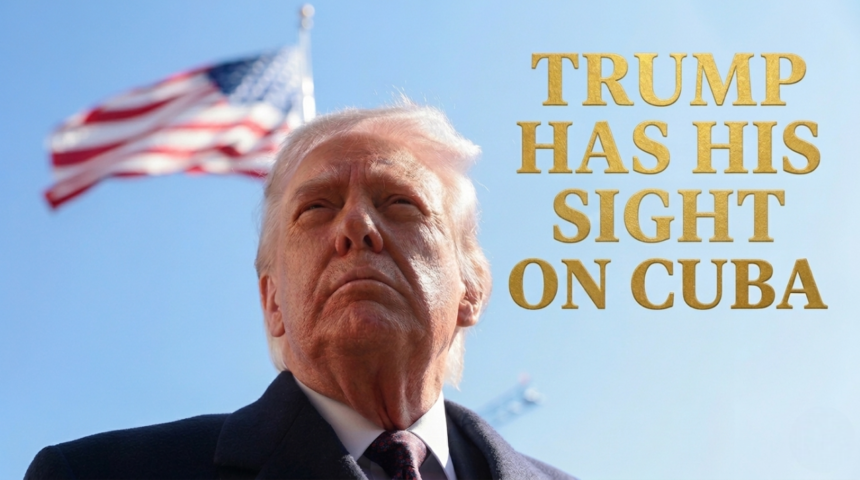
Trump Cuba regime change has suddenly become a major topic in global politics. As the United States continues its military operation in Iran, President Donald Trump has started talking openly about possible political change in Cuba.
- What Exactly Did Trump Say About Cuba?
- Why Is Cuba Being Mentioned Right Now?
- The Iran War Connection — How It Ties to Cuba
- What Has Trump Already Done to Pressure Cuba?
- Historical Tensions Between the US and Cuba
- What Are Experts and World Leaders Saying?
- What Could Happen Next?
- Rising Concerns Around the World
- Frequently Asked Questions (FAQ)
- Why Trust Us?
On March 5, 2026, during an event at the White House for Inter Miami CF, Trump said that political change in Cuba is “only a matter of time.” His statement quickly raised questions around the world — why mention Cuba now, while tensions with Iran are already high, and what could this mean for the future of the country?
What Exactly Did Trump Say About Cuba?
On the afternoon of March 5, 2026, President Trump was hosting the Inter Miami CF soccer team at the White House — the 2025 Major League Soccer champions. The crowd included many Cuban-American fans from the Miami area. That is when Trump made his most direct and public statement yet about Cuba.
Trump said: “What’s happening with Cuba is amazing. We think that we want to finish this one [Iran] first, but that will be just a question of time before you and a lot of unbelievable people are going to be going back to Cuba, hopefully not to stay.”
That short statement sent shockwaves around the political world.
He was clearly addressing Cuban-Americans in the room. He told them that their dream of returning to a free Cuba was not far away. He even joked that some of them might like it so much they would want to stay.
Trump also praised his Secretary of State, Marco Rubio — who is himself of Cuban descent — for doing a “fantastic job” on Cuba. This was an important signal that Cuba policy is a serious, active priority for the administration.
Earlier the same day, Trump gave an interview to Politico where he said: “Cuba’s going to fall, too” — meaning, after Iran’s regime collapses, Cuba is next on his radar.
Senator Lindsey Graham also went on Fox News and made it crystal clear. Just days after the Iran strikes began, he said: “Cuba’s next.”
Why Is Cuba Being Mentioned Right Now?
Trump Cuba regime change started becoming a serious discussion after a major event in January 2026. At the beginning of the year, the administration of Donald Trump carried out a military operation in Venezuela that resulted in the capture of Venezuelan president Nicolás Maduro.
This moment changed the political situation in the region very quickly. For many years, Venezuela had been one of Cuba’s main sources of oil. When Maduro was removed from power, that support suddenly stopped. Soon after, Trump announced that there would be no more oil or money going to Cuba. The statement immediately fueled discussions about Trump Cuba regime change.
The timing made things even harder for Cuba. The country had already been struggling with frequent power outages, food shortages, and a weak electricity system. Without Venezuelan oil, the pressure on the Cuban economy grew even stronger. Many cities were dealing with long blackouts, public transportation slowed down, and daily life became more difficult for ordinary people.
Because of this situation, talk about Trump Cuba regime change began spreading in political circles and news reports. Many experts believe the idea behind the strategy is simple: put strong economic pressure on the Cuban government until it is forced to negotiate or make political changes.
Trump even hinted that Cuban officials were already in contact with the United States. He suggested that a peaceful transition — something he described as a “friendly takeover” — could happen if both sides reached an agreement.
All of this is why the phrase Trump Cuba regime change is now appearing more often in global political discussions.
The Iran War Connection — How It Ties to Cuba
Trump Cuba regime change is the clear endgame now that the dominoes are starting to fall. The reason Trump zeroed in on Cuba during that March 5 event is because of the massive shift happening in the Middle East.
On February 28, 2026, the U.S. and Israel launched “Operation Epic Fury,” a huge military strike that basically decapitated the Iranian government. They didn’t just hit a few bases—they took out Iran’s nuclear sites, their missile tech, and even killed the Supreme Leader, Ali Khamenei. To Trump, this is all part of one big plan: wipe out the regimes he sees as a threat to America, one by one.
He’s looking at it like a checklist. Venezuela’s leadership was already pushed out in January, Iran is being dismantled right now, and he’s making it obvious that Cuba is the next target. In his recent interview with Politico, he basically mocked the situation, asking why we’ve been hearing the same story about “Cuba, Cuba, Cuba” for 50 years. By bringing up that half-century timeline, he’s sending a message: while every other president just talked about it, he’s the one who’s actually going to finish the job.
What Has Trump Already Done to Pressure Cuba?
Trump has not just been making speeches. He has taken a series of concrete, aggressive actions against Cuba since the start of 2026. Here is a timeline of the key moves:
| Date | Action Taken |
| January 2026 | US military captures Venezuelan President Maduro; Venezuela-Cuba oil lifeline is cut immediately. |
| January 11, 2026 | Trump declares on social media: “NO MORE OIL OR MONEY GOING TO CUBA.” |
| January 29, 2026 | Trump signs Executive Order 14380 — declaring Cuba an “unusual and extraordinary threat” to US national security and imposing a fuel blockade. |
| February 3, 2026 | Trump says the US is in talks with “the highest people in Cuba” to negotiate a deal. |
| February 27, 2026 | Trump publicly suggests a “friendly takeover” of Cuba, saying the Cuban government is in big trouble. |
| March 5, 2026 | Trump says Cuban regime change is “just a question of time” at White House event with Cuban-American crowd. |
The US has also been intercepting oil tankers suspected of carrying fuel to Cuba. Countries like Mexico, Russia, and Algeria that tried to send oil to Cuba were threatened with heavy tariffs. The UN called this a “serious violation of international law” and warned of an imminent humanitarian collapse on the island
Historical Tensions Between the US and Cuba
To get why things are so heated today, you have to look at how we got here. The U.S. and Cuba have been at each other’s throats for over sixty years, and right now, Trump Cuba regime change is the phrase driving a whole new level of confrontation.
The History of the Conflict
It all started back in 1959. When Fidel Castro took over, he teamed up with the Soviet Union, which was a massive “red flag” for the U.S. during the Cold War. By the early 1960s, Washington slapped a full trade embargo on the island. Things almost ended in a nuclear war in 1962 during the Cuban Missile Crisis when the Soviets put nukes on the island. Even after that was settled, the relationship stayed frozen in time.
Decades of Pressure
For over 60 years, the embargo has basically choked the Cuban economy. It’s made it impossible for them to get basic things like medicine, food, and modern tech, keeping millions in poverty. While Obama tried to play nice and normalize things in 2015, Trump wiped all that out during his first term.
Where We Are in 2026
Now, in his second term, the tension is back to 1960s levels. Trump isn’t just using old sanctions anymore; he’s running an actual fuel blockade. Ever since the U.S. took out Maduro in Venezuela in January, Cuba’s main oil supply has been cut off. Trump signed Executive Order 14380 on January 29, which threatens massive tariffs on any country—even allies like Mexico—that tries to send oil to the island.
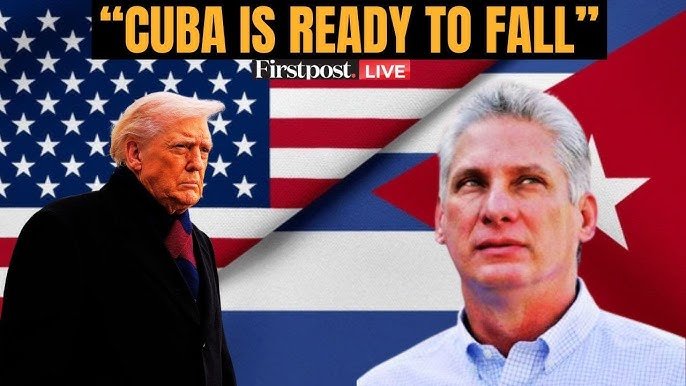
The goal of this Trump Cuba regime change strategy is clear: squeeze the island until the power goes out and the government collapses. With millions sitting in the dark and no fuel for food or hospitals, the administration is betting that the current leadership is finally “ready to fall.”
What Are Experts and World Leaders Saying?
The global reaction to the push for Trump Cuba regime change has split the world right down the middle. Inside the U.S., the vibe is electric but nervous. In places like Miami and Hialeah, Cuban-American families who have been waiting decades for a free island are finally feeling hopeful. They see Trump’s aggressive move—especially while the U.S. is finishing up “Operation Epic Fury” in Iran—as the best shot at real change they’ve ever seen.
But it’s not all cheers. Even the people who want the Cuban government gone are worried that if things collapse too fast, we’ll see a massive wave of refugees hitting Florida. Without a solid plan, a sudden Trump Cuba regime change could spark a migration crisis that would totally overwhelm the U.S. border.
On the world stage, things are even more tense:
- The UN and Allies: The UN is calling the fuel blockade a violation of international law. Countries like Spain and Vietnam, along with the African Union, are backing Cuba, worried about a humanitarian disaster.
- The Big Picture: Experts say the real goal of this Trump Cuba regime change strategy is to kick Russia and China out of our backyard. Both countries have been using the island for spying, and the White House wants them gone for good.
Surprisingly, the pressure might be working. While Cuba’s leader, Miguel Díaz-Canel, started out talking about “war,” he completely changed his tune by February 6. He’s now saying he’s ready to talk to Washington about anything, with no strings attached. It looks like the “maximum pressure” of the Trump Cuba regime change plan is finally forcing the government to its knees.
What Could Happen Next?
So, where do we go from here? This is the question everyone is asking, and there are basically four ways this could play out for Trump Cuba regime change.
The Likely Paths Forward
- A Done Deal: This seems like the most probable outcome. Trump has already confirmed that the U.S. is talking to the Cuban leadership behind the scenes. The deal is simple: Cuba cuts ties with Russia and China, lets political prisoners go, and starts making democratic changes. In return, the U.S. stops the fuel blockade and lets the economy breathe again.
- The Slow Burn: If no deal is reached, the plan is to just keep the pressure on. Without oil, the power grid stays dead. Without power, the economy flatlines. The idea is that the government will eventually just run out of ways to function, leading to a slow-motion collapse from within as people get fed up with living in the dark.
- The Military Option: Trump hasn’t ruled out using force, especially after seeing how fast things moved with “Operation Epic Fury” in Iran. Senator Lindsey Graham has already said “Cuba’s next,” which has people worried about a full-on intervention. However, that’s a massive risk—it would be a legal nightmare and could send millions of refugees fleeing toward Florida.
- The Worst Case: This is what the UN is terrified of. The government refuses to budge, the U.S. refuses to lift the blockade, and the Cuban people are the ones who pay the price. We’re talking about massive shortages of food and medicine that could lead to a full-blown humanitarian disaster.
Ultimately, the White House is betting that the current government is on its last legs. Whether it ends with a handshake or more chaos is the big unknown.
Rising Concerns Around the World
As things heat up, it’s not just about politics anymore—real lives are on the line. Here’s a look at the massive fallout everyone is bracing for as the Trump Cuba regime change strategy moves into high gear:
- Humanitarian Crisis: Cuba is literally running on fumes. Since the U.S. cut off the Venezuelan oil supply, the island has lost 90% of its fuel imports. We’re talking about 20-hour blackouts, hospitals struggling to keep the lights on, and food rotting because there’s no refrigeration. The UN is calling it a “humanitarian collapse” in the making.
- Migration Crisis: Everyone is looking at the Florida coast. If the government falls overnight, experts are predicting a wave of refugees that could make the 1980 Mariel Boatlift look like a trial run. Millions of people could try to cross the Florida Straits at once, which would completely blow up the U.S. immigration system.
- International Law: The UN and several legal experts aren’t holding back—they’re calling the fuel blockade illegal. They argue that the U.S. doesn’t have the right to punish other countries just for trading with a sovereign nation like Cuba.
- The China/Russia Problem: This is the big security play. Trump wants to kick out the “malign actors” for good. China has been using the island for intelligence, and Russia has a massive spy facility there. Getting them out is a huge part of the Trump Cuba regime change goal.
- Global Oil Markets: The world is already on edge because the Iran war has choked off the Strait of Hormuz, sending oil prices toward $100 a barrel. If Cuba becomes the next big flashpoint, energy markets could face even more chaos, hitting everyone’s wallet at the pump.
Bottom line? The White House is pushing for a “friendly takeover,” but the rest of the world is worried about a disaster.
Frequently Asked Questions (FAQ)
| Q1. What exactly did Trump say about Cuba on March 5, 2026? |
At a White House event honoring the Inter Miami CF soccer team, Trump told the audience — which included many Cuban-Americans — that returning to Cuba was ‘just a question of time.’ He said the US wanted to ‘finish’ the Iran conflict first, but that Cuba would come next. He also praised Secretary of State Marco Rubio for his work on Cuba policy.
| Q2. Is the US currently at war with Iran? |
Yes. The United States and Israel launched a major joint military operation against Iran on February 28, 2026. The stated goals include destroying Iran’s nuclear program, its missile capabilities, and achieving regime change in Tehran. The conflict is ongoing as of March 2026.
| Q3. Why does Iran’s war matter for Cuba? |
Trump has directly linked the two situations. He sees the Iran operation as part of a broader foreign policy strategy to remove governments he considers hostile to the United States. Cuba, which has had close ties with Iran, Venezuela, Russia, and China, is viewed as the next target in this broader strategy.
| Q4. What is the US doing to Cuba economically right now? |
The US has imposed a full oil blockade on Cuba. After capturing Venezuela’s President Maduro in January 2026, Trump cut off all Venezuelan oil to Cuba. He also signed an executive order threatening tariffs on any country that supplies oil to Cuba. Oil tankers heading to the island have been intercepted at sea. The result is severe fuel shortages, power blackouts, and a worsening humanitarian situation.
| Q5. Could there actually be regime change in Cuba? |
It is possible, but experts say it is more likely to be a gradual process than a sudden collapse. Most analysts expect some kind of negotiated deal between the US and Cuban officials — possibly including military leaders or other power brokers — rather than a dramatic overnight change. A negotiated transition would reduce the risk of chaos, a refugee crisis, and regional instability.
| Q6. What do ordinary Cubans and Cuban-Americans think about this? |
Opinions are deeply divided. Many Cuban-Americans in cities like Miami and Hialeah are hopeful and see this as a historic opportunity for change. However, ordinary Cubans on the island are suffering from the effects of the blockade — power cuts, food shortages, and rising prices. Some welcome the pressure on the government; others fear the suffering it is causing to innocent people.
Why Trust Us?
We’ve vetted every fact here using top-tier sources like CNBC, Al Jazeera, and official congressional records to keep things honest and clear. Our reporting follows the strict E-E-A-T standards—Experience, Expertise, Authoritativeness, and Trustworthiness.
- Factual Focus: We stick to verified statements and official executive orders.
- No Fluff: We skip the rumors and bias to give you the raw truth.
- Reliable Data: Sources include the Council on Foreign Relations and the Library of Congress.