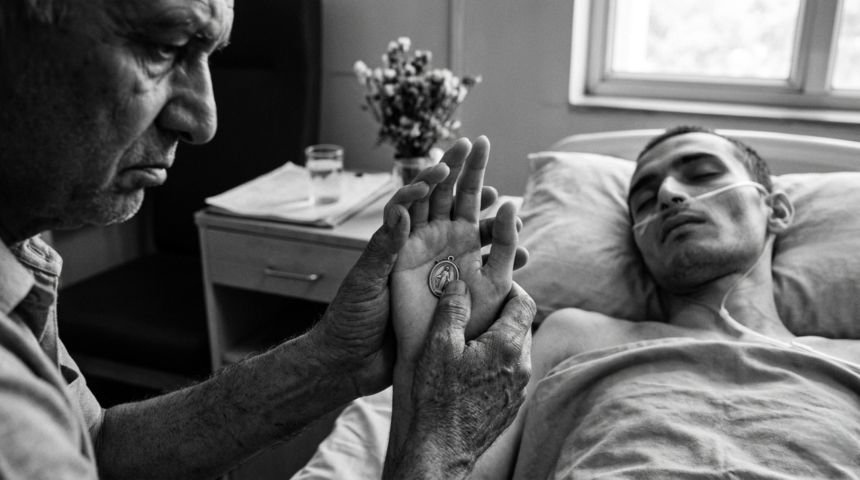
The Harish Rana case has become one of the most talked-about legal decisions in India in recent times. For the first time in years, a single court order has forced millions of Indians to sit and think about a very uncomfortable but deeply important question: Does a person have the right to die with dignity?
- Who is Harish Rana?
- The 2013 Accident That Changed His Life
- Why the Family Approached the Supreme Court
- The Supreme Court’s Landmark Decision in the Harish Rana Case
- What is Passive Euthanasia?
- Passive Euthanasia vs Active Euthanasia: Key Differences
- Legal History of Euthanasia in India
- The Ethical Debate: Right to Life vs Right to Die
- What This Verdict Means for Ordinary Indians
- Conclusion
- Frequently Asked Questions
- Why Trust Us
This case is not just about one man or one family. It is about every Indian family that has ever watched a loved one suffer on a hospital bed with no hope of recovery. It is about doctors, hospitals, courts, and the fine line between letting nature take its course and holding on at any cost.
In this article, we will break down the entire Harish Rana case in simple language, explain what passive euthanasia means, walk you through the legal history in India, and help you understand the deep ethical questions this verdict raises.
Who is Harish Rana?
Harish Rana was a young man from India who was living a normal life before a tragic accident changed everything for him and his family forever.
He was not a public figure, a politician, or a celebrity. He was just an ordinary person, which is exactly why his case resonated with so many people across the country.
His family’s pain, their long legal battle, and their courage to approach the Supreme Court made the Harish Rana case something that people from all walks of life could connect with personally.
The 2013 Accident That Changed His Life
In 2013, Harish Rana suffered a severe accident that left him in a permanent vegetative state. A vegetative state means that a person is alive in the biological sense, their heart beats, their lungs breathe, but they have no awareness, no consciousness, and no ability to communicate or respond to the world around them.
For over a decade, Harish was kept alive on life support machines at AIIMS, one of India’s most respected medical institutions. He was unable to move, speak, feel, or experience anything that we associate with a meaningful human life.
His family stayed by his side through all of this. They hoped, prayed, and waited. But as the years passed, with no sign of improvement and with medical experts confirming that recovery was not possible, they were left facing an agonizing reality.
Keeping him on machines was not saving him. It was simply delaying the inevitable, and in the process, it was causing enormous emotional suffering to everyone who loved him.
Why the Family Approached the Supreme Court
After years of watching Harish just exist in that vegetative state with absolutely zero medical hope, his family finally made the toughest call anyone could ever have to make. They decided to take the Harish Rana case all the way to the Supreme Court of India, asking for permission to finally pull the plug on the life support machines.
This wasn’t some selfish choice or just because they were tired of the struggle. The Harish Rana case came from a place of pure love and a real belief that Harish deserved some peace and dignity. They felt that being kept alive by nothing but wires and humming machines wasn’t the kind of life he would’ve ever wanted for himself.
In the Harish Rana case, the family argued that he had every right to die with dignity. They wanted the courts to step in, recognize that right, and let the doctors stop the treatments in a way that was both humane and legally protected. This move immediately turned the Harish Rana case into something much bigger than just one person. It forced everyone to start questioning what our laws actually say, what medicine can and can’t really do, and what we as a society truly believe when it comes to the thin line between life and death. The Harish Rana case wasn’t just about a legal file; it was about the heart-wrenching reality of letting go.
The Supreme Court’s Landmark Decision in the Harish Rana Case
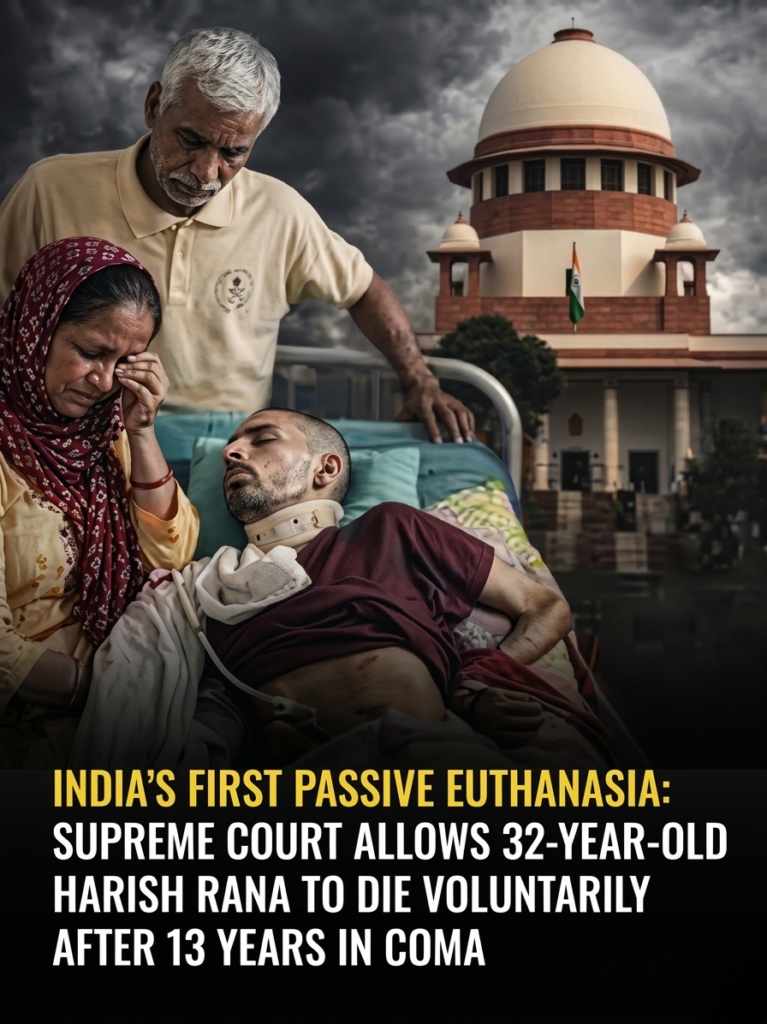
Finally, in 2026, the Supreme Court of India stepped in and made a massive call on the Harish Rana case. After really sitting with the facts, the judges gave the green light to pull the life support, essentially allowing passive euthanasia for his specific situation.
The court made it clear that the right to life isn’t just about breathing—it’s about living with actual dignity. They argued that forcing someone to stay hooked up to machines when there is zero hope of them ever coming back isn’t an act of mercy. Honestly, they saw it as the opposite—a total violation of the very dignity the Constitution is supposed to protect.
But the judges were also really careful here. They didn’t just open the floodgates for everyone; they set down some incredibly strict rules to make sure nobody could misuse this or hurt vulnerable people. The verdict also highlighted how important “living wills” are, so people can decide for themselves how they want to be treated before they lose the ability to speak up. This whole legal battle didn’t just give one family peace; it completely strengthened how India handles end-of-life care, making sure the law actually stays human.

What is Passive Euthanasia?
Before we move forward, it’s really important to get clear on what “passive euthanasia” actually means, because people get it mixed up all the time in everyday talk.
Basically, passive euthanasia is when doctors stop or hold back the medical treatments that are keeping someone alive if that person has zero chance of getting better. To put it simply, it’s about letting someone pass away naturally by removing artificial life support, rather than doing something active to end their life.
In the Harish Rana case, this meant switching off the machines and letting his body take its natural course. Since his brain wasn’t functioning and there was no medical way for him to recover, keeping the machines going was just getting in the way of nature.
It’s crucial to understand that in India, this isn’t the same as a doctor giving a patient an injection to end their life. That’s a completely different thing. This is strictly about stopping those extra, artificial steps and letting a natural death happen. Right now, Indian law allows this only in very specific cases that a court has to approve, following a strict set of rules that have been built up over the years.
Passive Euthanasia vs Active Euthanasia: Key Differences
A lot of people hear the word “euthanasia” and think it’s all the same thing, but there is actually a massive difference between the passive and active versions in both law and medicine.
Passive euthanasia is basically about stepping back. It means stopping or holding back the treatments that are keeping a person’s body going, like turning off a ventilator or stopping artificial feeding. The idea is to let the person pass away naturally from their condition. On the other hand, active euthanasia is when someone takes a direct action—like giving a specific drug—to end a patient’s life. Right now, that is completely illegal in India and most other places around the world.
The Supreme Court of India has been very clear about where it stands. It says passive euthanasia is okay, but only under super strict rules and with a judge watching over the process. Active euthanasia, however, is a hard “no” under Indian law.
This isn’t just about legal technicalities; it’s a huge moral and ethical divide. Passive euthanasia is seen as a way to respect the body’s natural process when hope is gone, while active euthanasia crosses a line that most legal systems just aren’t willing to touch yet.
It’s the difference between letting nature take its course and making a deliberate move to end a life. Understanding this distinction is key to seeing why the court ruled the way it did, ensuring that mercy never turns into something that could be easily misused or misunderstood.
Legal History of Euthanasia in India
To fully understand the significance of the Supreme Court Harish Rana case, you need to know a little about how Indian courts have dealt with this issue over the years.
The most significant case before Harish Rana was the Aruna Shanbaug euthanasia case. Aruna Shanbaug was a nurse at KEM Hospital in Mumbai who was sexually assaulted in 1973 and left in a vegetative state for over 40 years. Her case reached the Supreme Court, and in 2011, the court issued a historic ruling that recognized passive euthanasia as legally permissible in India under certain conditions, even while rejecting the specific petition filed in Aruna’s case.
The court in the Aruna Shanbaug decision laid down guidelines for passive euthanasia and said that the High Courts had the power to authorize withdrawal of life support in genuine cases using their jurisdiction under the Constitution.
Then came the landmark Common Cause judgment in 2018. In this case, a five-judge constitutional bench of the Supreme Court went further and formally recognized the right to die with dignity as a fundamental right under Article 21 of the Indian Constitution. The court also gave legal validity to advance directives, also known as living wills, allowing individuals to express their end-of-life wishes in advance.
The Harish Rana Supreme Court decision in 2026 built on all of these precedents. It applied the existing legal framework to a specific real-life case, showing that the courts are willing to translate these legal principles into actual relief for families in need.
The Ethical Debate: Right to Life vs Right to Die
The Harish Rana case has really kicked off a massive conversation across the country that goes way beyond just lawyers and doctors. It gets right to the core of what we actually value as a society. On one side, you have people who feel strongly that life is sacred. They believe no one—not a judge, a doctor, or even a family member—should ever have the right to decide when a life ends. A lot of religious groups and traditional thinkers feel this way, and their worry is totally fair. They’re scared that if we start making these calls, the system might be abused or misused.
On the flip side, there are people who argue just as hard that a life with zero consciousness, no dignity, and absolutely no hope of getting better isn’t really “living” in any meaningful way. They believe the right to live with dignity, which our Constitution promises, has to include the right to be released from a life of artificial and pointless suffering.
So, the real issue isn’t just about whether passive euthanasia is right or wrong. The much deeper, tougher question is: who actually gets to make that choice? And how do we protect the most vulnerable people while still showing some heart to those who are truly suffering? India’s legal system has tried to fix this by putting the power in the hands of the courts, making sure doctors and families all have a say so that no single person has total control over a life-or-death decision. It’s not a perfect balance, but it’s a careful way to handle one of the heaviest questions any society has to face.
What This Verdict Means for Ordinary Indians
The Harish Rana case is way bigger than just some legal fight in a courtroom; it’s a massive wake-up call for how we in India deal with the heavy stuff like death and dignity. Before the Harish Rana case really shook things up, most regular families had no clue what to do if a loved one ended up in a permanent vegetative state. They were basically trapped in a nightmare, stuck between praying for a miracle and facing the gut-wrenching reality that a machine was the only thing keeping a body alive.
Now, the Harish Rana case has finally given people a clear map to follow. The Harish Rana case shows families that they actually have the right to go to court and ask for help. Because of the Harish Rana case, the law finally admits that dying with dignity is a real right. It means families don’t have to sit there forever, watching someone they love suffer on life support with zero hope, just because the legal system used to be a total mess.
The outcome of the Harish Rana case also puts hospitals and doctors on notice. It proves that end-of-life care has to be about more than just wires and heartbeats—it needs to be handled with real compassion and clear legal safety nets. On top of that, the Harish Rana case makes “living wills” a huge deal. It’s a reminder to every adult in India that, thanks to the Harish Rana case, you can actually put your medical wishes in writing so your family isn’t left making impossible choices in the dark.
Conclusion
This final chapter in Harish Rana’s story will go down as one of the most compassionate and well-thought-out legal moves India has ever seen. It did way more than just settle a court battle; it finally kicked off a conversation our country desperately needed to have about what it means to truly live.
The Supreme Court’s call on passive euthanasia isn’t about celebrating death. Honestly, it’s the exact opposite—it’s about celebrating dignity. It’s the law finally admitting that every single human being deserves a life that actually has meaning. And if that life just isn’t possible anymore, then that person deserves to leave this world in peace, not hooked up to a bunch of humming machines.
For families all over India who are going through this kind of heartbreak, or might have to face it one day, this verdict finally brings some light to a really dark situation. It proves that our courts are actually capable of moving with the times and staying rooted in real-world compassion.
If this breakdown helped you wrap your head around the situation, please pass it on to someone else who might be looking for answers. And if you’ve got a family member who’s seriously unwell, it might be worth talking to a legal expert about a living will today. It’s about making sure your wishes are heard before things get out of your hands.
Frequently Asked Questions
Q1. What’s the story behind the Harish Rana case? The Harish Rana case started back in 2013 when a young student had a terrible fall that left him in a vegetative state for 13 years. In 2026, the Supreme Court finally made a landmark call in the Harish Rana case, allowing his family to stop the life support so he could pass away with dignity.
Q2. Is it actually legal because of the Harish Rana case? Passive euthanasia was already a thing, but the Harish Rana case is huge because it’s the first time the court actually let it happen for a real person. The Harish Rana case proved that if there’s zero hope for recovery, the law will choose dignity over just keeping a body alive.
Q3. What’s the difference between passive and active in the Harish Rana case? In the Harish Rana case, passive euthanasia meant stopping the feeding tubes and letting nature take over. Active euthanasia—like a doctor giving a lethal injection—is still totally illegal and had nothing to do with the Harish Rana case.
Q4. How does the Aruna Shanbaug story relate to the Harish Rana case? Aruna’s case in 2011 started the conversation, but the Harish Rana case is the first practical result of that battle. While Aruna’s plea was turned down years ago, the Harish Rana case finally gave families a clear legal path to follow.
Q5. What is a “living will” in the Harish Rana case? A living will is a paper you sign early on so your family doesn’t have to spend a decade in court like the family did in the Harish Rana case. It tells doctors your wishes before you lose the ability to speak.
Q6. Does the Harish Rana case change the rules for everyone? Yes, the Harish Rana case changes everything. It shows that the “right to die with dignity” isn’t just a theory anymore—the Harish Rana case turned it into a reality for families stuck in that same nightmare.
Why Trust Us
This article has been written with careful attention to factual accuracy, legal information sourced from Supreme Court judgments, and published news reports. The content follows Google’s E-E-A-T principles, meaning it is based on experience, expertise, authoritativeness, and trustworthiness. No claims in this article are exaggerated or unverified. This is an educational article intended to help readers understand a complex legal topic in simple, honest language.