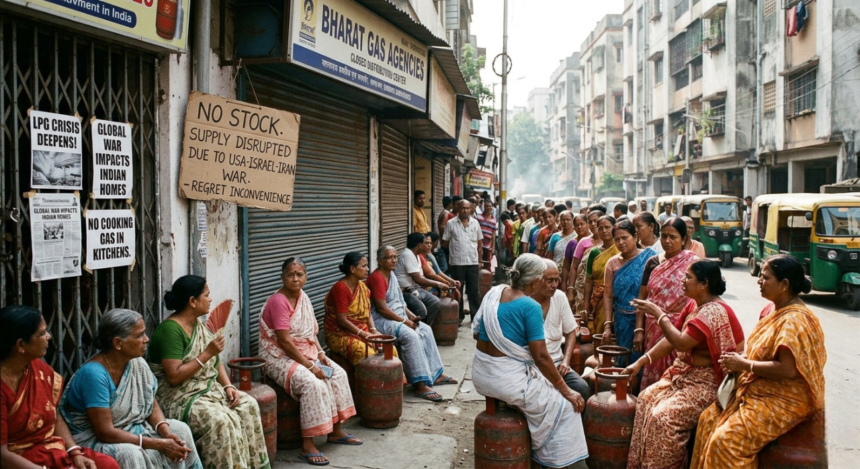
India is currently facing a serious LPG shortage that is making daily life harder for millions of households and businesses. The ongoing US-Israel-Iran conflict has disrupted global energy supply chains, and India is feeling the heat — quite literally — in its kitchens and restaurants.
- What Is Happening with LPG in India Right Now
- Why the US-Israel-Iran Conflict Is Affecting LPG Supply
- India’s Heavy Dependence on LPG Imports
- The Strait of Hormuz: The World’s Most Critical Energy Route
- Rising LPG Prices Across India in 2026
- Restaurants and Businesses Hit First
- Government Measures to Control the Crisis
- Will Indian Households Face a Cooking Gas Shortage
- Global Energy Crisis and Its Impact on India
- What You Can Do Right Now ?
- FAQ Section
If you have been waiting longer than usual for your cooking gas cylinder or noticed a sudden jump in prices, this global crisis is likely the reason.
Let us break it all down simply, so you understand exactly what is happening and how it affects you.
What Is Happening with LPG in India Right Now
It’s March 2026, and honestly, things are getting pretty desperate with the LPG shortage in India. You can’t walk down a street in big cities like Mumbai, Bangalore, or Kolkata without seeing massive lines of people just waiting for hours outside gas agencies. This LPG shortage in India has turned into a total mess for families and business owners alike. In places like Chennai and Rajasthan, restaurant owners are losing their minds because they can’t get their hands on commercial cylinders. If you can’t get gas, you can’t cook—it’s as simple and as brutal as that.
The whole reason we’re stuck in this LPG shortage in India is because of the chaos happening overseas. Ever since the US and Israel hit Iran with those military strikes back in February, the Middle East has been a powderkeg. Now, the Strait of Hormuz—which is basically the main artery for our energy supply—is either shut down or so dangerous that ships can’t get through.
Because we buy almost all our gas from that part of the world, the moment that route got blocked, the LPG shortage in India kicked in hard. It’s scary how fast a war thousands of miles away can lead to empty kitchens and closed businesses right here. Everyone is feeling the heat of this LPG shortage in India, and right now, there’s no clear end in sight while those shipping lanes stay blocked. This LPG shortage in India is easily the biggest headache the country is facing right now.
Why the US-Israel-Iran Conflict Is Affecting LPG Supply
Honestly, the LPG shortage in India right now is a total nightmare, and it’s way bigger than just paying more at the petrol pump. This LPG shortage in India is a massive chain reaction that started when things went south in the Middle East. Back in late February 2026, the US and Israel hit Iranian targets, and ever since, the whole region has been on fire. This war has directly caused the LPG shortage in India because even big suppliers like Qatar had to stop their production at Ras Laffan after their plants got caught in the crossfire.
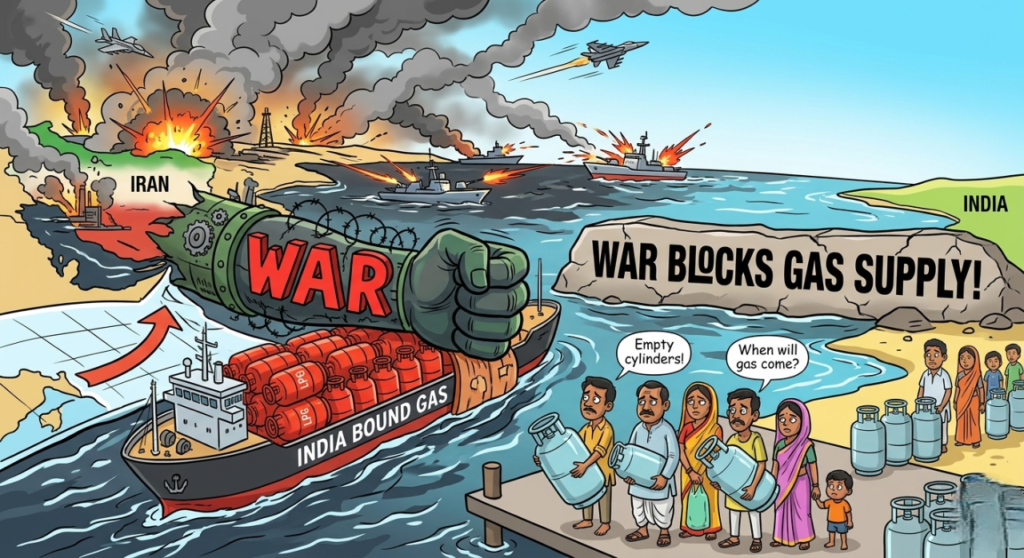
The biggest reason for this LPG shortage in India, though, is what’s happening at the Strait of Hormuz. That tiny stretch of water is basically the only way our gas gets here, and right now, it’s a total ghost town because of the security risks. Ships loaded with gas are just sitting out there, stranded, because it’s too dangerous to move. This has made the LPG shortage in India unavoidable since we get about 85% to 90% of our supply through that one narrow gap.
Because those ships couldn’t get through in March 2026, the gas we were counting on just never showed up. That’s why the LPG shortage in India hit so fast—prices shot up instantly and finding a cylinder became almost impossible. It’s wild to think that a war thousands of miles away can cause an LPG shortage in India that reaches our own kitchens in just a few days. This isn’t just some business news; the LPG shortage in India is a real-life crisis that’s making it hard for regular people to even cook dinner.
India’s Heavy Dependence on LPG Imports
To really get why this LPG shortage in India is hitting so hard, you’ve got to look at our massive reliance on imports. India is the second-biggest importer of gas on the planet. Last year, we used over 33 million metric tonnes, but we only produce a third of that ourselves. The rest—about 67%—comes from the Gulf. This reliance is exactly what triggered the current LPG shortage in India.
The real bottleneck for the LPG shortage in India is the Strait of Hormuz. Since 90% of our gas imports pass through this one tiny waterway, the war in the Gulf is a direct hit to our kitchen shelves. Because those shipping lanes are blocked, the LPG shortage in India is now a daily reality for 330 million households. Any hiccup at sea quickly turns into a crisis at home. This LPG shortage in India shows just how vulnerable we are. With supply lines cut, the LPG shortage in India is a struggle for millions.
The Strait of Hormuz: The World’s Most Critical Energy Route
The Strait of Hormuz is this tiny, crucial stretch of water tucked between Iran and Oman, and it’s honestly the most important shipping lane on the planet. To put it in perspective, about 20% of the world’s daily oil supply moves through this one spot. For us in India, the stakes are even higher—more than half of our LNG and crude oil imports have to pass through this narrow gap to reach our shores.
When the conflict between the US, Israel, and Iran blew up in early 2026, things turned into a mess real fast. Shipping through the strait basically ground to a halt because the security risks were just too high. Insurance costs for these massive tankers went through the roof, and a lot of shipping companies just decided it wasn’t worth the risk, so they either stopped their trips or tried to find much longer ways around.
This created a massive logjam at sea. Ships full of gas meant for India were just sitting there stranded or taking massive detours, which led to huge delays and added a ton of extra costs to every shipment. It’s exactly what the finance ministry warned about in their February 2026 report—they made it clear that if this fighting drags on, it’s going to wreck our energy security and send prices for everything spiraling out of control. It’s a scary situation because when this one waterway gets blocked, the impact hits our economy and our homes almost immediately.

Rising LPG Prices Across India in 2026
The jump in gas prices across India this month is probably the clearest sign that the supply chain is falling apart. As soon as the situation in the Gulf got shaky, the costs spiked almost overnight. Families are now paying an extra ₹60 per domestic cylinder, while small business owners—the folks running local dhabas and hotels—are getting hit even harder with a massive ₹115 increase for commercial gas.
But the official price tags don’t even tell the full story. On the ground, things are getting pretty ugly. In a lot of cities, a “black market” has popped up because people are so desperate. You’ve got cylinders that are supposed to be ₹910 being sold under the table for as much as ₹2,000. For a normal family or anyone living on a tight budget, that kind of sudden jump is a total gut punch. It’s not just a minor inconvenience; it’s a huge financial strain that eats into money meant for food or rent.
Meanwhile, the global energy market is losing its mind. Brent crude prices have already climbed about 11% to 15% since the fighting started, sitting near $90 a barrel as of early March. Some experts are even sounding the alarm that if this conflict doesn’t settle down, we could see oil hitting anywhere from $110 to $150. If that happens, the pressure on our wallets is only going to get worse. It’s a stressful time for everyone just trying to keep their stove running and their business afloat.
Restaurants and Businesses Hit First
The government is trying its best to make sure regular homes get their cooking gas first, but that’s left the commercial sector in a massive bind. If you walk into any restaurant, hotel, or even a local roadside dhaba right now, you’ll see the struggle firsthand. These businesses live and breathe on those big blue commercial cylinders, and without them, the stoves just stay cold.
The numbers coming out of the major cities are honestly pretty staggering. In Mumbai, around 8,000 hotels and restaurants are feeling the squeeze, with many owners saying they might have to just lock their doors temporarily because they can’t cook. Down in Chennai, it’s even more dire—industry heads are warning that nearly 10,000 food joints across Tamil Nadu could shut down if the supply doesn’t start moving again soon.
Over in Bengaluru and Kolkata, the wait times have become ridiculous. Imagine running a busy kitchen and being told your gas delivery is delayed by ten days. To cope, a lot of places are cutting back their hours or changing how they cook just to save every bit of fuel they have left.
This mess is even hitting the big tech players. Stocks for delivery giant Swiggy and Zomato took a dip because analysts are worried that if restaurants aren’t cooking, there’s nothing for them to deliver. But the people getting hit the hardest aren’t the big corporations—it’s the kitchen staff, the delivery riders, and the gig workers. When a kitchen goes dark, these folks lose their daily wages instantly. It’s a tough situation that’s rippling through the whole economy, from the fancy dining rooms in the city to the delivery bikes on the street.

Government Measures to Control the Crisis
To be fair, the Indian government didn’t just sit around once they realized how bad the gas situation was getting. They jumped into action pretty fast to keep things from spiraling out of control.
One of the biggest moves was using the Essential Commodities Act. This basically gives the government the power to stop people from hoarding gas and to crack down on anyone trying to sell cylinders at crazy black-market prices. They also made a tough call: households come first. Indian Oil and other big players were told to prioritize the 330 million homes that need gas to cook every day. If you’re a restaurant or a big factory, you now have to go through a special committee to get your supply.
Local refineries were also told to go full throttle—100% capacity—to make as much gas as possible right here in India. They even started diverting certain chemicals usually used for industrial work into the cooking gas pool, which boosted domestic production by about 10%.
Since the Middle East is so shaky, India has also started looking elsewhere for imports. We used to get about 45% of our gas from places like the US and Norway, but that’s being pushed up to 70% to bypass the mess in the Gulf. To keep the stock we do have from running out too fast, you now have to wait 25 days between bookings instead of the usual 21.
The top leaders are on it, too. The Petroleum Minister met with the PM on March 10 to map out the next steps. The good news? The government says we have about 12 to 16 weeks of stock left. So, while it’s definitely a serious squeeze, we aren’t at a total “emergency” level for home kitchens just yet. They’re working on a buffer to make sure the lights—and the stoves—stay on.
Will Indian Households Face a Cooking Gas Shortage
Here is the million-dollar question: is your kitchen actually going to run out of gas? Based on the latest government updates and data from the oil companies, the situation for families is under control, but we aren’t totally out of the woods yet.
The government has been very clear that regular households are the top priority. If there’s a squeeze, it’s the commercial and industrial users who will feel the pinch first. Right now, about 60 lakh cylinders are still being sent out every single day, which is what we usually see during normal times. However, you might have noticed that the wait time after booking has gone up a bit, and some neighborhoods are seeing delays of a few days.
If the fighting in West Asia drags on for several more weeks, the pressure on our local supply is going to climb. Even though the government is scrambling to find new suppliers in places like the US or Norway, moving that much gas to new shipping routes isn’t something that happens overnight.
For most of us, the real impact right now is just a longer wait for your delivery and that annoying price hike. For a total shortage to hit home kitchens, the blockade at the Strait of Hormuz would have to last a lot longer than it has.
That said, it’s definitely worth keeping an eye on the news. The biggest problem right now is actually panic—people are trying to “stock up” out of fear, which is making the local lines even longer. The best advice is to just book when you need it and try not to hoard extra cylinders.
Global Energy Crisis and Its Impact on India
Look, it’s important to realize that the LPG shortage in India isn’t just a one-off problem. It’s actually part of a massive energy crisis in the Middle East that’s shaking up the whole world. While we’re all feeling the pinch with our cooking gas, the country is also dealing with a huge 40% cut in LNG from Qatar. Since Qatar usually provides nearly half of all the natural gas we bring in, this is hitting everything from city gas networks to the factories that make our fertilizers and electricity.
The situation is so risky right now that Petronet LNG, our biggest importer, can’t even send ships to Qatar to pick up their orders. The Strait of Hormuz has become a total danger zone, and ships are basically stuck. This led the group representing city gas companies to send a desperate letter to GAIL, warning that if this keeps up, smaller customers and priority areas across India are going to be in serious trouble.
Our own finance ministry didn’t sugarcoat it in their February 2026 report either. They warned that a long fight out there could wreck our economy—putting the rupee under pressure, making inflation worse, and forcing the government to move money away from other things just to keep the lights on. Even though inflation was pretty low back in January, these rising energy costs are likely to push prices for everything else much higher very soon.
Right now, the government is looking at emergency “break glass” options. They’re thinking about dipping into our strategic oil reserves and trying to strike quick deals with the US and Norway to bring in more fuel. It’s a massive scramble to keep the LPG shortage in India from turning into a total national shutdown.
What You Can Do Right Now ?
Look, if you’re a regular person or run a small shop, the LPG shortage in India is definitely stressful, but there are ways to handle it without losing your cool. First and most importantly: please don’t panic buy. When people start hoarding, it makes the LPG shortage in India much worse for everyone else in your neighborhood. We’ve seen cases where people who usually book every two months are suddenly trying to grab a cylinder every two weeks, and that just chokes the system.
To keep things moving, make sure you book your refill on time through the official apps or government portals. Because of the LPG shortage in India, the gap between bookings has been moved to 25 days, so plan ahead! If you’re running a restaurant or a small dhaba and the LPG shortage in India is threatening to shut you down, reach out to the special committee set up by the oil companies to get your supply reviewed.
While the LPG shortage in India continues, it’s also a smart move to use an induction cooktop if you have one. It can take some of the pressure off your gas usage. Most importantly, don’t believe everything you hear on WhatsApp. Stick to official news to stay updated on the LPG shortage in India so you aren’t acting on rumors. If we all stay calm and book only what we need, we can manage this LPG shortage in India together until the ships start moving again.
FAQ Section
Q1. What is causing the LPG shortage in India? The war between the US, Israel, and Iran has essentially blocked the Strait of Hormuz. Since we get nearly 90% of our imports through that one route, the LPG shortage in India kicked in the moment those ships got stuck or were forced to turn back.
Q2. Which cities are hit hardest by the LPG shortage in India? Mumbai, Bengaluru, Chennai, and Kolkata are feeling it the most. The LPG shortage in India is especially brutal for restaurants right now, with some waiting over 10 days for a single commercial cylinder.
Q3. Have prices gone up because of the LPG shortage in India? Yes. Domestic cylinders are up by ₹60 and commercial ones by ₹115. In some areas, the LPG shortage in India has led to a black market where prices are nearly double the official rate.
Q4. Will my home kitchen run out during this LPG shortage in India? It’s unlikely. The government is prioritizing families over businesses to manage the LPG shortage in India. We have about 12 to 16 weeks of stock left, though you might have to wait a few extra days for your delivery.
Q5. How is the government fixing the LPG shortage in India? They’ve ordered refineries to work at 100% capacity and are cracking down on hoarding. They are also trying to bypass the Middle East by bringing in more gas from the US and Norway to end the LPG shortage in India.
Q6. When will the LPG shortage in India finally end? There’s no fixed date yet. It depends on when the fighting stops and the shipping lanes are safe again. Until then, finding new supply routes is the only way to beat the LPG shortage in India.