
Startup India 2.0 is one of the most talked-about topics in India’s business world right now. The government has been pushing this vision hard, and millions of young entrepreneurs are riding the wave of excitement.
- The Rise of India’s Startup Ecosystem and Startup India 2.0
- Startup India 2.0 and the Funding Winter: A Reality Check.
- Government Startup Policies: Real Support or Just Symbolism?
- Are Unicorn Startups in India Truly Strong Under Startup India 2.0?
- India vs Global Competition
- Startup India 2.0 — Bubble or Breakthrough?
- Final Verdict: Is Startup India 2.0 Hype Real?
- Conslusion
- FAQ Section
- Q1. What exactly is “Startup India 2.0”?
- Q2. How many startups does India actually have in 2024?
- Q3. What’s the deal with the “funding winter”?
- Q4. Are these “Unicorns” actually making money?
- Q5. What is the government actually doing to help?
- Q6. So, what does the future look like?
- Why Trust Us
But here is the honest question nobody is really asking — is Startup India 2.0 actually delivering on its promises, or is the hype starting to fade?
India went from a few hundred startups in 2016 to over 1,40,000 DPIIT-recognised startups by 2024. The Indian startup ecosystem has grown faster than almost anyone expected. Yet behind those impressive numbers, the real story is more complicated.
In this article, we break down everything — startup funding in India, the unicorn bubble, government policies, and what the future of startups in India actually looks like. No jargon. No fluff. Just a clear, honest analysis.
The Rise of India’s Startup Ecosystem and Startup India 2.0
The foundation of what we now call Startup India 2.0 was laid during this period of rapid ecosystem expansion. Look, we can’t ignore the facts: India’s startup scene has exploded.
Many analysts credit Startup India 2.0 policies for pushing Tier-2 cities into the startup conversation. When the “Startup India” thing first kicked off in 2016, we had maybe 500 recognized startups. Cut to today, and that number has shot past 2,00,000. We aren’t just a player anymore; we are the third-biggest startup ecosystem on the planet, right behind the US and China.
That’s a hell of a jump.
It’s not just about the big hitters in Bengaluru, Mumbai, or Delhi anymore either. Places like Jaipur, Indore, and Coimbatore are making serious moves. You’ve got young founders from small towns building real stuff—apps for farmers, better schools, and easier ways to pay for things.
Plus, these companies have actually put people to work, creating over 2 million jobs. For a fresh graduate today, a startup is often a much bigger (and more exciting) employer than a traditional giant.
So yeah, the growth is definitely there. But don’t let the big numbers fool you—they don’t tell the whole story.
Startup India 2.0 and the Funding Winter: A Reality Check.
Here is where things get a little uncomfortable.
Startup funding in India hit a peak in 2021 and 2022. Global investors were pouring money into Indian startups at an almost crazy pace. Total funding crossed $35–40 billion in 2021 alone. Valuations were shooting up. Every other week, a new startup was becoming a unicorn.
Then came 2023 — and everything changed.
Funding dropped by nearly 50–60% compared to the peak years. Investors started asking harder questions. Profitability over growth became the new mantra. Several well-known startups — including some with unicorn status — went through massive layoffs. Companies like Byju’s, Unacademy, and Ola faced serious setbacks.
This period is now commonly called the “funding winter”, and it hit the Indian startup ecosystem hard.
But was it unexpected? Not really.
Venture capital in India was always going to slow down after the pandemic-era boom. Interest rates went up globally, which made investors more careful. The easy money era was over. Suddenly, startups that had been burning cash without a clear path to profit found themselves in trouble.
The lesson here is simple — fast growth without a strong business model is not real growth. It is just a cycle waiting to crash.
That said, 2024 has shown signs of recovery. Funding is picking up slowly, but this time investors are more selective, and that is actually a healthy sign.

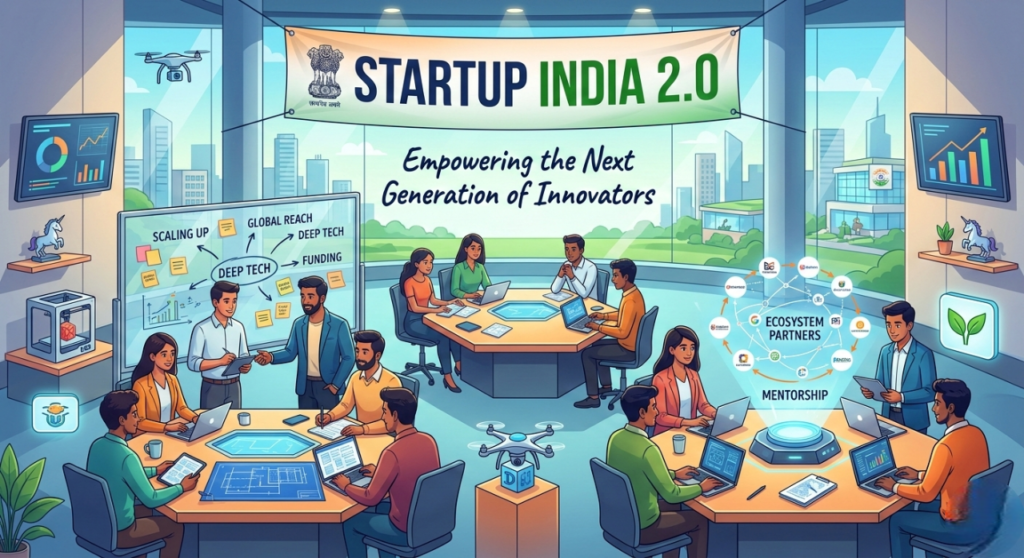
Government Startup Policies: Real Support or Just Symbolism?
This is where the debate gets heated, and honestly, for good reason.
On paper, the government’s playbook—things like the Fund of Funds, SIDBI support, and those famous tax holidays—looks solid. And let’s be fair: some of this stuff actually works.
For instance:
- The 80-IAC tax break has given early-stage startups some much-needed breathing room.
- The Seed Fund Scheme (SISFS) has put actual capital into the hands of hundreds of new founders.
- Self-certification for labor laws has cut down some of the annoying red tape for young teams.
It’s unfair to act like these don’t matter—they do. But if you talk to a founder actually grinding on the ground, they’ll tell you a different story.
The reality? Accessing these “benefits” is a nightmare. The paperwork is soul-crushing, and the wait times for approvals are endless. Plus, if you’re a founder in a smaller city, you might not even know these schemes exist in the first place.
Then there’s the “ease of doing business” elephant in the room. Sure, India’s global ranking has gone up, but try closing a failing company—it’s still a total mess. Tax disputes are a headache, and getting a loan without putting up your house as collateral is still nearly impossible for most early-stage startups.
So, the honest take is this: the support is there, but the implementation gap is massive. For “Startup India 2.0” to be more than just a tagline, the government needs to stop launching new schemes and start making the ones they already have actually work for people.
Are Unicorn Startups in India Truly Strong Under Startup India 2.0?
India’s got over 110 unicorns now—companies valued at a billion bucks or more. On paper, that sounds massive. And in terms of sheer scale, it is.
But let’s be real: a high valuation doesn’t always mean a healthy business.
During the 2020–2022 hype, a lot of these unicorns inflated their worth based on aggressive growth metrics. When the “funding winter” hit and investors stopped handing out free cash, the reality check was brutal. Some had their valuations slashed, while others had to go through messy restructuring just to survive.
This doesn’t mean the whole scene is crashing. You’ve got companies like Zepto, Razorpay, PhonePe, and Groww that are the real deal—they have actual users, solid revenue, and a path to staying power.
The takeaway? Not all unicorns are built the same. There’s a huge difference between a company worth $1 billion because of hype and one that’s worth $1 billion because it actually makes money.
The silver lining is that this pressure has forced everyone to fix their fundamentals. It’s been painful, sure, but it’s exactly what the ecosystem needed. Indian unicorns are finally “growing up”—moving away from the “burn cash and worry later” mindset to one that actually cares about being smart and profitable. It’s a tough shift, but it’s the only way to build something that lasts.
India vs Global Competition
When we talk about how India stacks up globally, the truth is a mix of massive wins and some pretty glaring gaps.
First, the advantages. India’s got a few things nobody else can match:
- The Market: A massive population of 1.4 billion people, with a middle class that’s finally got money to spend.
- The “Stack”: Our digital foundation—think UPI, Aadhaar, and dirt-cheap data—is genuinely world-class. It’s a dream for any startup trying to scale fast.
- The Talent: We churn out millions of hungry engineers and business grads every year, most of whom speak English—a huge plus for going global.
But it’s not all smooth sailing. There are some serious hurdles:
- The Red Tape: Dealing with both central and state regulations can feel like running through mud. It just slows everything down.
- The Scaling Problem: While it’s easier to get “seed money” now, finding the big bucks for Series C and beyond is still way harder here than in the US or China.
- The Deep-Tech Gap: We’re still playing catch-up in high-end stuff like semiconductors and AI hardware. We’re lagging behind the US, China, and even Israel in pure technical innovation.
- Brain Drain: A lot of our best talent still looks at Silicon Valley or Singapore and thinks, “I’d rather build there.”
The bottom line? India is a heavy hitter in Fintech, Edtech, and SaaS. But if we want to be the undisputed #1, we’ve got to stop just building apps and start investing in hard tech and long-term capital.
Startup India 2.0 — Bubble or Breakthrough?
This is the question on everyone’s mind, and the honest answer isn’t a simple “yes” or “no.” It’s not a total bubble, but it’s not a guaranteed win either. The truth sits right in the middle, and it all comes down to what happens in the next three to five years.
There are plenty of reasons to be genuinely optimistic:
- AI and SaaS: Indian startups aren’t just making apps for India anymore; they’re building global B2B products. We’ve become a top-tier SaaS hub, and AI-first companies are popping up everywhere.
- The Deep Tech Push: The government is finally looking beyond e-commerce with things like the National Deep Tech Startup Policy.
- A Maturing Scene: We have better mentors, more experienced founders, and a much stronger community of angel investors than we did a decade ago.
- The Global Connection: The Indian diaspora—founders and investors worldwide—is now pumping serious knowledge and cash back into the local ecosystem.
But we still need to be cautious:
- The Hype Factor: You still see startups with zero clear way to make money raising massive rounds.
- Manufacturing Lag: If you’re building “hard tech” or manufacturing hardware, the infrastructure still isn’t where it needs to be.
- The Exit Problem: It’s still too hard for early investors to get their money out because our secondary markets aren’t developed enough.
The bottom line? The risk of a 2021-style bubble has dropped, but a real global breakthrough isn’t a given. It’s going to take more than just chasing valuation milestones. We need consistent policy work, a massive push into deep tech, and a cultural shift where founders focus on building businesses that actually last.
Final Verdict: Is Startup India 2.0 Hype Real?
So, here is the straightforward, no-nonsense answer: The foundation is absolutely real, but the hype? That’s still partially exaggerated.
Let’s give credit where it’s due—India genuinely has one of the most exciting startup ecosystems on the planet right now. The raw talent is there, the market is massive, and our digital infrastructure is arguably better than most developed nations. To go from basically zero to over 1,40,000 recognized startups in less than a decade is a massive achievement. You can’t fake those kinds of numbers, and you can’t ignore the millions of jobs that have been created because of them.
But—and this is a big “but”—the loud, shiny buzz around “Startup India 2.0” often glosses over the gritty reality of the challenges we still face. When we look past the fancy headlines, we see some serious cracks: the funding gaps for scaling up, the massive execution issues in government schemes that look great on paper but are a nightmare to actually use, the inflated unicorn valuations that aren’t backed by profit, and a glaring deficit in deep-tech innovation. We are great at building apps, but we are still catching up when it comes to building the actual hardware and complex tech of the future.
The good news? The startup boom isn’t over. It’s just finally growing up. The “get rich quick” era of burning investor cash to buy customers is fading away, and it’s being replaced by something more mature and much more realistic. Honestly? That is exactly what we need. A “boring” profitable company is worth ten “hyped” unicorns that lose money every single second.
If India actually wants to lead the global startup race over the next decade, we need a shift in focus. We need fewer flashy press conferences and more ground-level execution. We need fewer ribbon-cutting moments for new initiatives and more genuine, hands-on support for the founders building in Tier-2 cities—the ones who are solving actual India-specific problems like rural healthcare or agricultural waste. These are the people who don’t always get the spotlight but are building the backbone of the economy.
The potential here is enormous. We have the people, the tools, and the drive to be the world’s undisputed startup capital. Whether India actually capitalizes on that potential or just stays “the country with a lot of potential” depends entirely on the choices made in the next few years. It’s time to move past the slogans and start doing the hard work of making the ecosystem as strong in reality as it looks on a PowerPoint slide.
Conslusion
If you have read this far, you already know the answer is not simply yes or no.
Startup India 2.0 is not a bubble waiting to burst — but it is also not the unstoppable rocket ship that some headlines make it out to be. The truth is right in the middle, and that is actually a mature place to be.
India has built something genuinely impressive in a short span of time. Going from a handful of startups in 2016 to over 1,40,000 recognised startups in 2024 is not luck — it is the result of real entrepreneurial energy, a young ambitious population, and a digital infrastructure that most countries would envy.
But real progress means being honest about the gaps too.
Startup funding in India is recovering, but it needs to become more consistent and less dependent on global sentiment cycles. Unicorn startups in India need to move beyond valuation games and focus on building businesses that last. Government startup policies need better ground-level execution, not just better branding. And the Indian startup ecosystem as a whole needs to invest more seriously in deep-tech, hardware, and rural innovation.
The good news is — the ecosystem is learning. Founders are smarter. Investors are more disciplined. The government is slowly improving implementation. And India’s domestic market is only getting bigger.
The future of startups in India is not about surviving the funding winter. It is about using that difficult period to build stronger, more resilient companies. The startups that come out of this phase will be far more capable than the ones that rode the easy money wave in 2021.
So is the hype around Startup India 2.0 real?
Partially — yes. The potential is absolutely real. The execution still needs work.
And that is the most honest, human answer anyone can give you.
FAQ Section
Q1. What exactly is “Startup India 2.0”?
Think of Startup India 1.0 (launched in 2016) as the “awareness” phase. It was about getting people excited, cutting some initial red tape, and putting India on the global map. Startup India 2.0 is the “maturity” phase. The focus has shifted from just counting the number of startups to looking at the quality of what’s being built. It’s an evolved version of the original plan that pushes for innovation in “hard” areas—like deep-tech, green energy, and solving problems in rural India—rather than just building another delivery app for big cities.
Q2. How many startups does India actually have in 2024?
The growth has been staggering. As of 2024, India has blown past 1,40,000 officially recognized startups (those registered with the DPIIT). To put that in perspective, we had fewer than 500 back in 2016. This explosion has cemented India’s spot as the third-largest startup ecosystem in the world, sitting right behind the heavyweights: the USA and China. It’s no longer just a trend; it’s a massive part of our national economy.
Q3. What’s the deal with the “funding winter”?
You’ve probably heard that the “easy money” has dried up. That’s the “funding winter.” It happened because, between 2020 and 2022, valuations got out of control—investors were throwing cash at anything that grew fast, even if it lost money. When global interest rates rose and the economy tightened, investors snapped out of it. They stopped caring about “growth at any cost” and started asking, “How do you actually make a profit?” This forced startups to cut costs and fix their business models, which was painful but necessary.
Q4. Are these “Unicorns” actually making money?
The honest answer? Some are, many aren’t. A “Unicorn” (a company valued at over $1 billion) is often just a number on a piece of paper based on what investors think it’s worth. While some are still burning cash, we’re seeing a major shift. Companies like Zepto, Groww, and PhonePe are proving that you can be a giant and still have solid financial fundamentals. The era of bragging about high valuations is being replaced by bragging about actual revenue.
Q5. What is the government actually doing to help?
The government has a few main tools in its kit. There’s the Startup India Seed Fund (SISFS), which helps brand-new founders get their first bit of capital. Then there’s the Fund of Funds managed by SIDBI, which puts money into venture capital firms to invest in startups. They also offer tax breaks (like Section 80-IAC) and allow young companies to “self-certify” for labor and environment laws, so they don’t get buried in inspections during their first few years.
Q6. So, what does the future look like?
The future is bright, but it’s going to look different. The “Wild West” days of reckless spending are over. We’re moving into a phase where AI, SaaS, Fintech, and Agri-tech will lead the way. Because India has such a massive domestic market and a world-class digital backbone (like UPI), the foundation is rock solid. The next decade won’t be about how many startups we can start—it’ll be about how many world-class, profitable companies we can actually finish.
Why Trust Us
This article is based on official data from the DPIIT, NASSCOM, and the Economic Survey of India. We aren’t here to sell you on any specific startup or government scheme; our goal is simply to give you a balanced, honest look at the ecosystem using 2024 statistics. We keep things objective and regularly update our research to make sure you’re getting the most accurate picture possible.